
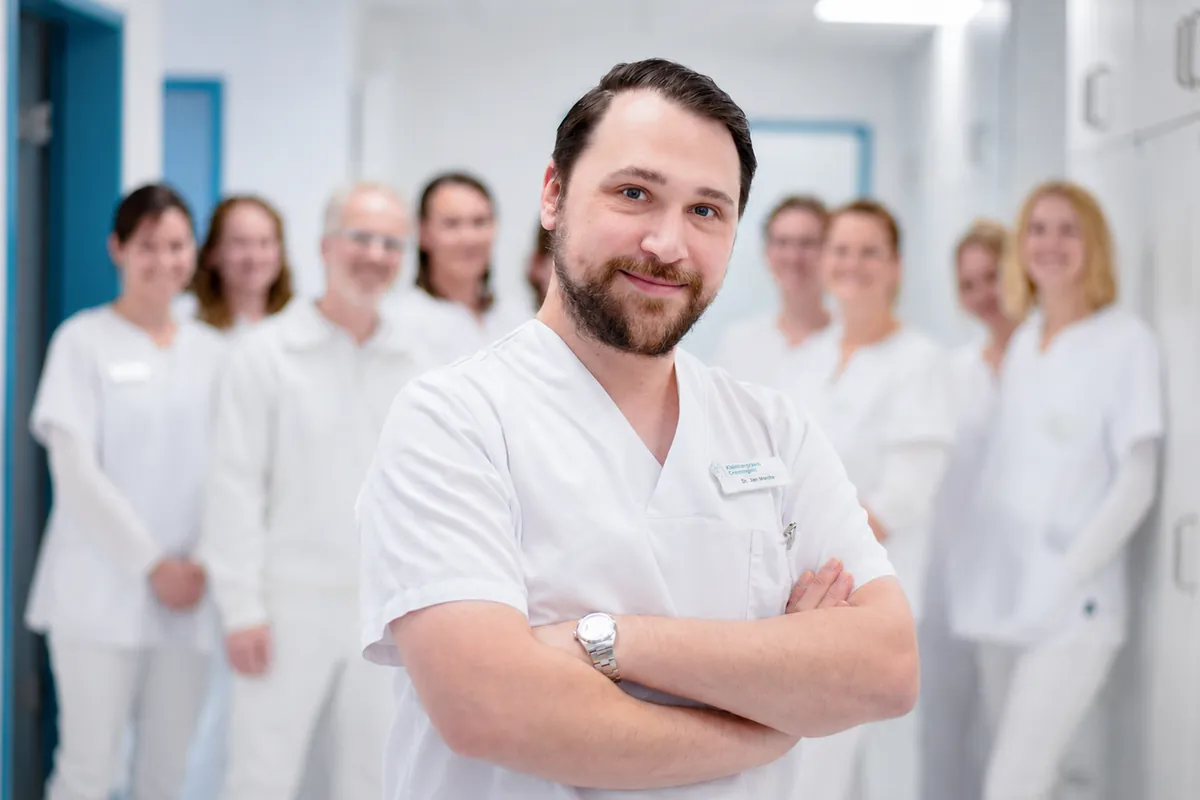
Dr Jan Minde
Veterinary dentistry & soft-tissue surgery
Veterinary Dentistry · Dental specialism
Dogs and cats often simply keep eating, even with diseased or missing teeth. They get used to a constant pain that you barely notice in everyday life — until, after a dental treatment, you suddenly see how much brighter your pet seems. As your veterinary dentist in Cremlingen, we work against exactly this hidden suffering.
Your veterinary dentist for Cremlingen, Braunschweig, Königslutter am Elm, Wolfenbüttel and Wolfsburg.
 Professional body
Member of the DGT
German Society for Veterinary Dentistry
Professional body
Member of the DGT
German Society for Veterinary Dentistry
What you can look out for
Because animals hide dental pain, an attentive eye is worthwhile. These six observations are a good reason to bring your pet to us.
It still smells noticeably even after normal care, a sign of deposits or inflammation.
Careful chewing, or chewing on one side only, often points to a painful tooth.
Increased drooling or frequent lip-smacking can be a sign of discomfort in the mouth.
Swollen or bleeding gums indicate inflammation of the tooth-supporting structures.
Visible deposits or loosened teeth are a clear reason for an examination.
If your pet avoids hard food or plays less, the teeth may be the cause.
Dental X-ray
Root infections, broken roots or, in cats, so-called resorptive lesions lie beneath the gums, a purely visual check would miss them. Only dental X-ray shows every tooth individually and makes a confident decision possible.
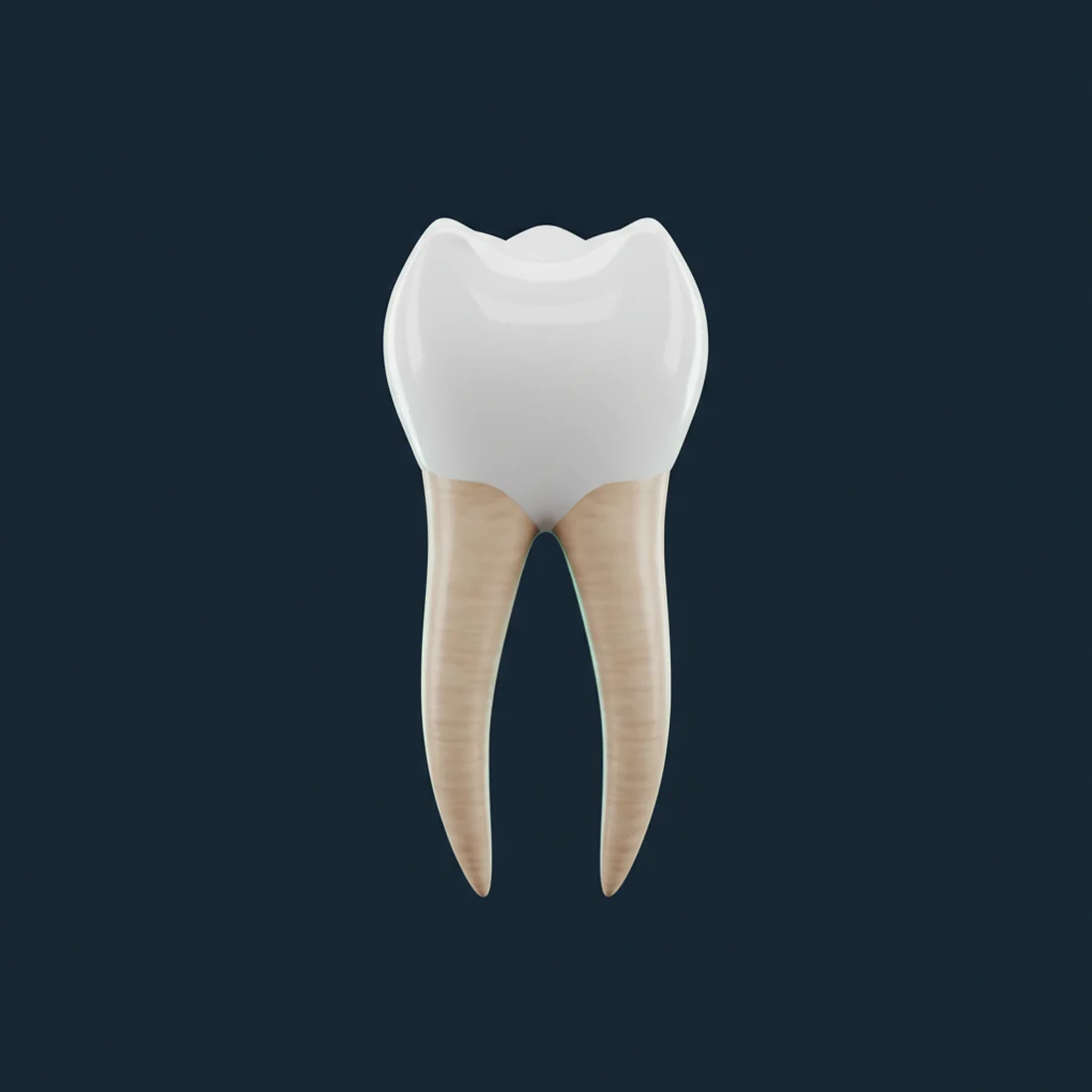 Visible1/3
Hidden2/3
Root infection
Fracture
Resorptive lesion
Image created with AI
Visible1/3
Hidden2/3
Root infection
Fracture
Resorptive lesion
Image created with AI
Our services
With Dr Jan Minde and Dr Susanne Buschtöns we have two veterinary dentists focusing on dental care, from the preventive check through tooth preservation to dental surgery.
Detects diseases that stay invisible from the outside: root infections, fractures and resorptive lesions in cats.
Thorough cleaning under gentle anaesthesia, including beneath the gum line.
Where possible we preserve teeth with tooth-preserving, endodontic measures, where necessary we remove diseased teeth gently, always with effective pain management.
How to accustom your pet gently to dental care at home.
We also treat rabbits, guinea pigs & co. with expert care.
Conditions we treat
Many dental conditions develop hidden beneath the gum line. These are the findings we most often detect and treat, reliably diagnosed with dental X-ray.
The most common dental condition in dogs and cats: inflammation of the tooth-supporting tissue, not to be confused with simple gum inflammation (gingivitis). We clean thoroughly, including below the gum line, and stop it from progressing.
A painful breakdown of the tooth substance, in cats as FORL, in dogs as CORL. Barely visible from outside, we detect it on dental X-ray and treat affected teeth specifically.
A broken tooth with an exposed nerve is painful and an entry point for bacteria. Depending on the finding, we preserve the tooth or remove it gently.
Persistent bad breath is rarely harmless, usually plaque or inflammation is behind it. We clarify the cause and treat it, instead of just masking the smell.
Orthodontics
In dogs and cats, orthodontics is not about a „pretty“ set of teeth, but solely about function and freedom from pain. Misaligned teeth can bite into the gums, the palate or other teeth, causing pain, injuries and, over time, damage to the tissue. Such malocclusions can be hereditary and skeletal (e.g. overbite or underbite) or affect individual teeth.
Especially important in puppies: if deciduous (baby) teeth remain while the permanent teeth are already erupting („double row of teeth“), the incoming teeth can be pushed into a misalignment. Canine teeth that stand too close together or point inward and bite into the palate are also a common, painful problem, and are best detected early.
What we do: Already during the dental examination, gladly during the change of teeth. We assess your pet’s bite and confirm the findings with dental X-ray. Painful causes, such as persistent deciduous teeth, we treat specifically. We also carry out more extensive orthodontic corrections ourselves where necessary, or refer you to highly specialised colleagues.
Out of responsibility: Orthodontics in animals serves solely the animal’s welfare and never appearance. A cosmetic „correction“ intended to mask hereditary malalignment in breeding animals is something we decline on animal-welfare grounds.
How a dental treatment works
A thorough dental treatment can only be carried out painlessly and safely under anaesthesia. This allows us to assess the entire set of teeth, X-ray every tooth and clean beneath the gums as well.
We examine your pet, discuss the risks and add a blood test where needed.
Every tooth is X-rayed and assessed individually, only then is the treatment plan set.
Tartar and deposits are removed, and diseased teeth are treated as gently as possible.
Your pet comes round in calm surroundings. You take it home with clear instructions.
Dental health & general well-being
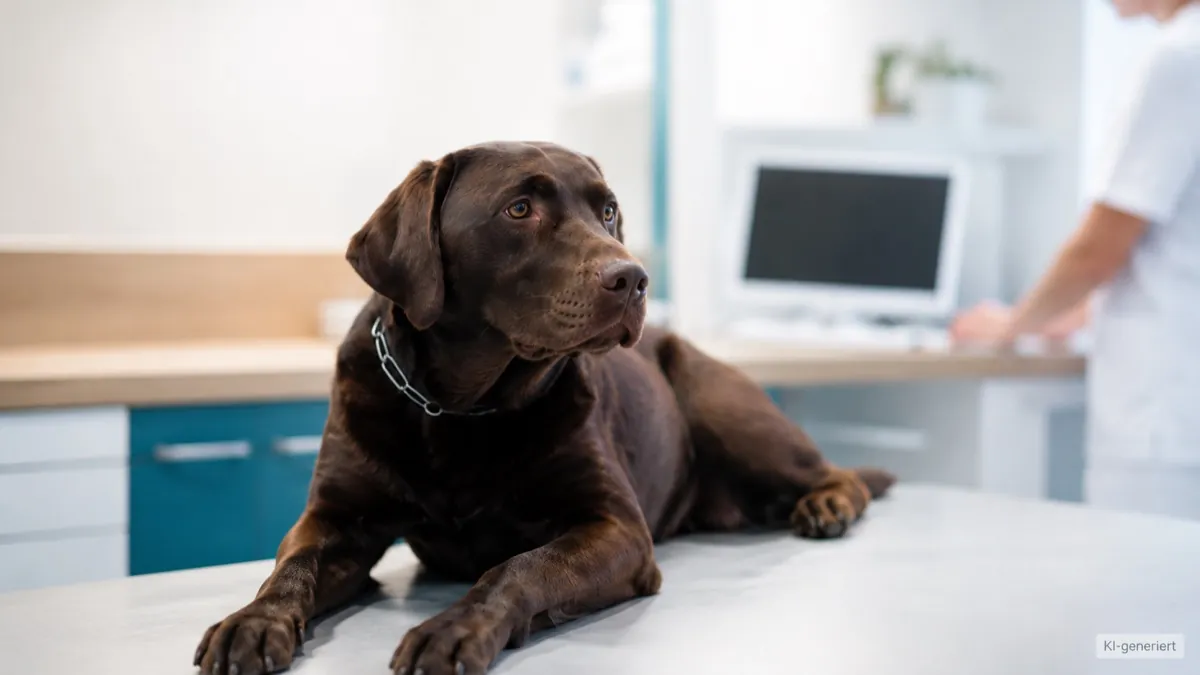
Through the bloodstream, bacteria from an untreated dental infection can also place a strain on other parts of the body. A treated set of teeth is therefore more than cosmetic. It can noticeably improve your pet's well-being.
Many owners report after a dental treatment: their pet seems brighter, plays again and is more balanced. This shows how closely dental health and quality of life are connected.
 Mouth · Origin
Heart
Kidney
General well-being
Mouth · Origin
Heart
Kidney
General well-being
Rabbits & small pets
If the teeth are not worn down sufficiently, misalignments, sharp edges and painful changes develop. If your pet eats less or its droppings change, you should not wait.
We examine and treat rabbits, guinea pigs and other small pets with expertise and gentleness, with the specialist knowledge their particular anatomy requires.
For small pets, every day often counts — please do not hesitate.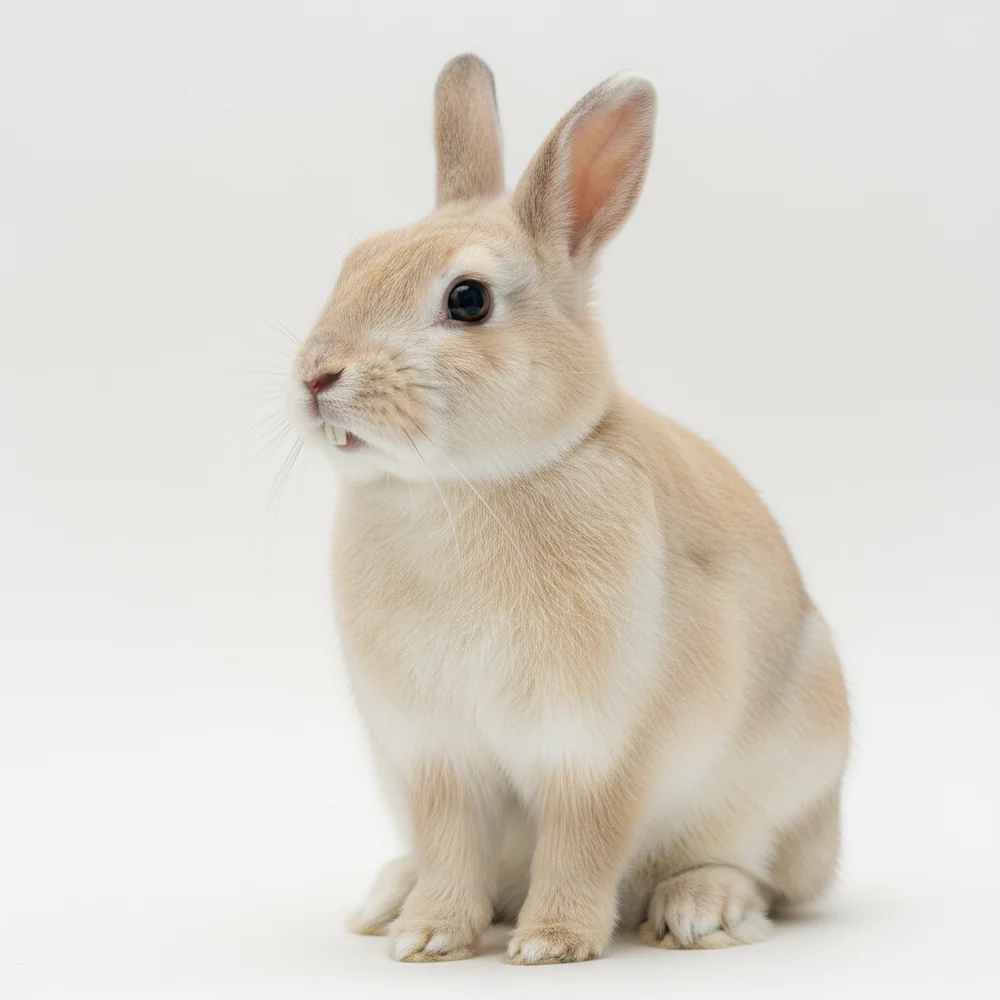 Image created with AI
Only under anaesthesia can all teeth be thoroughly assessed, every tooth X-rayed and the areas beneath the gum line cleaned painlessly. Before the anaesthesia we examine your pet, discuss possible risks and add a blood test where needed.
Typical signs are bad breath, slow or one-sided chewing, increased drooling, reddened gums, visible tartar or a reluctance to eat hard food. Animals often hide dental pain, if in doubt, you should have the teeth examined.
A large part of every tooth lies hidden within the jawbone. Root infections, or in cats so-called resorptive lesions, cannot be seen from the outside. Only X-raying each individual tooth shows which teeth can be preserved and which need to be treated.
No. Whether and which teeth are treated or removed is only decided after examination and X-ray. Our aim is to preserve healthy teeth and to treat only diseased teeth.
Yes. In rabbits, guinea pigs and other small pets the teeth keep growing throughout life, which can lead to painful misalignments. If a small pet eats less, you should not wait. Here every day often counts.
Gentle tooth brushing, which your pet is best accustomed to early on, together with suitable chewing options, supports dental health. Regular check-ups help to spot problems early, before they cause discomfort.
FORL (feline odontoclastic resorptive lesions) is a painful breakdown of the tooth substance that mainly affects cats, in dogs it is called CORL. It is often invisible from the outside and only becomes apparent on dental X-ray. We treat affected teeth specifically to end the pain.
Periodontitis is an inflammation of the tooth-supporting tissue and the most common dental condition in dogs and cats. We treat it with a professional dental cleaning under anaesthetic, including below the gum line, and stop it from progressing before teeth are lost.
Persistent bad breath is usually a sign of plaque or inflammation in the mouth. It is rarely harmless. We clarify the cause and treat it; regular dental care and check-ups help to prevent it.
If deciduous teeth remain while the permanent teeth are already breaking through, the latter can be pushed into a misalignment, and plaque accumulates more easily between the teeth. Have your puppy's bite checked during the change of teeth; early treatment is often simpler and gentler.
Bright rooms, modern technology and a well-coordinated team. That is what the place where your pet is treated looks like.
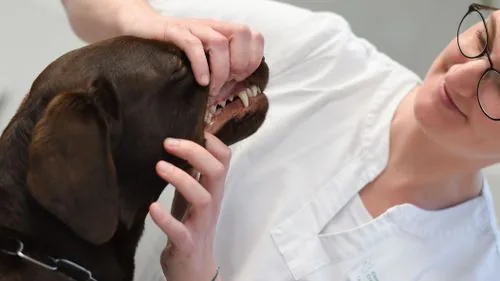
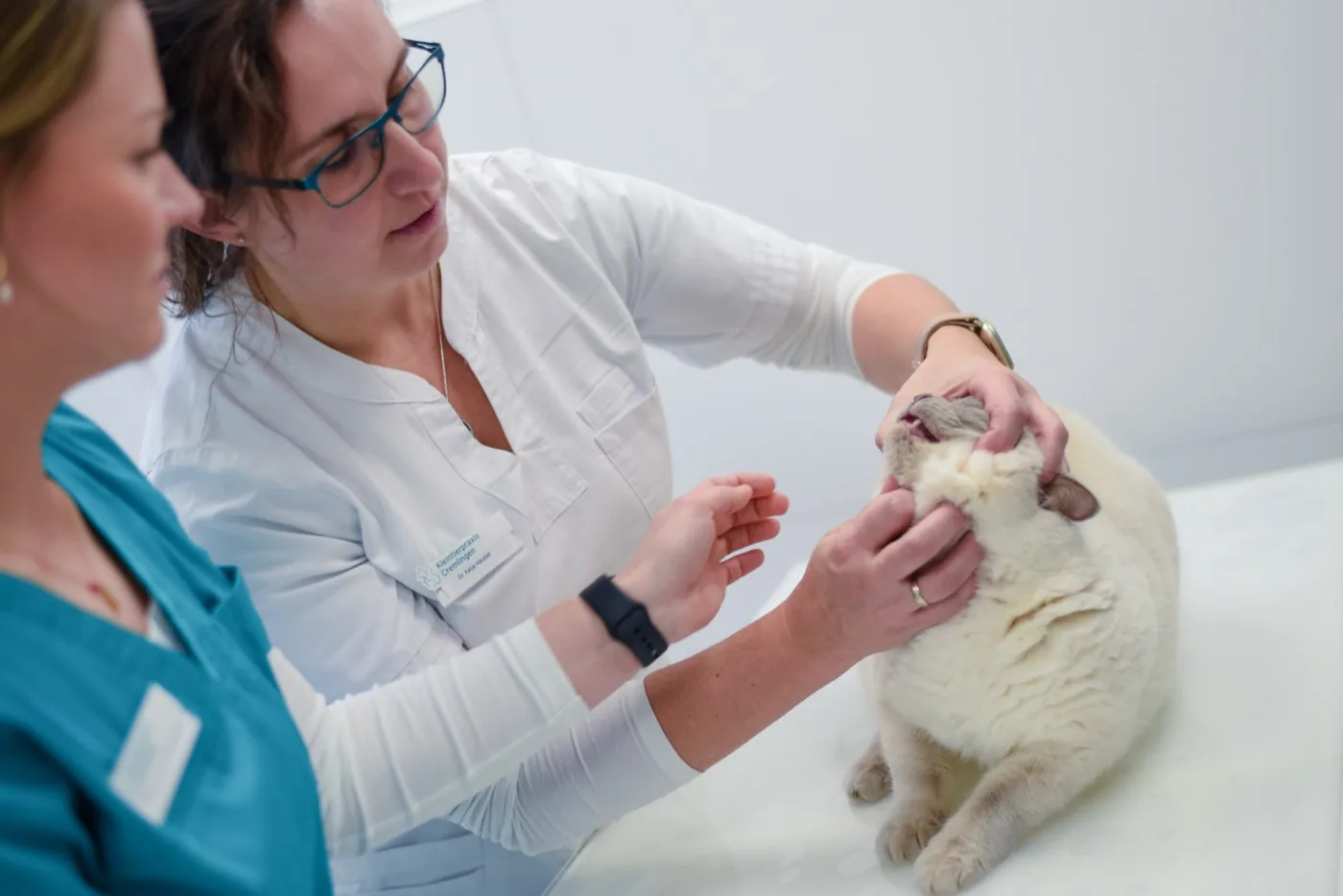
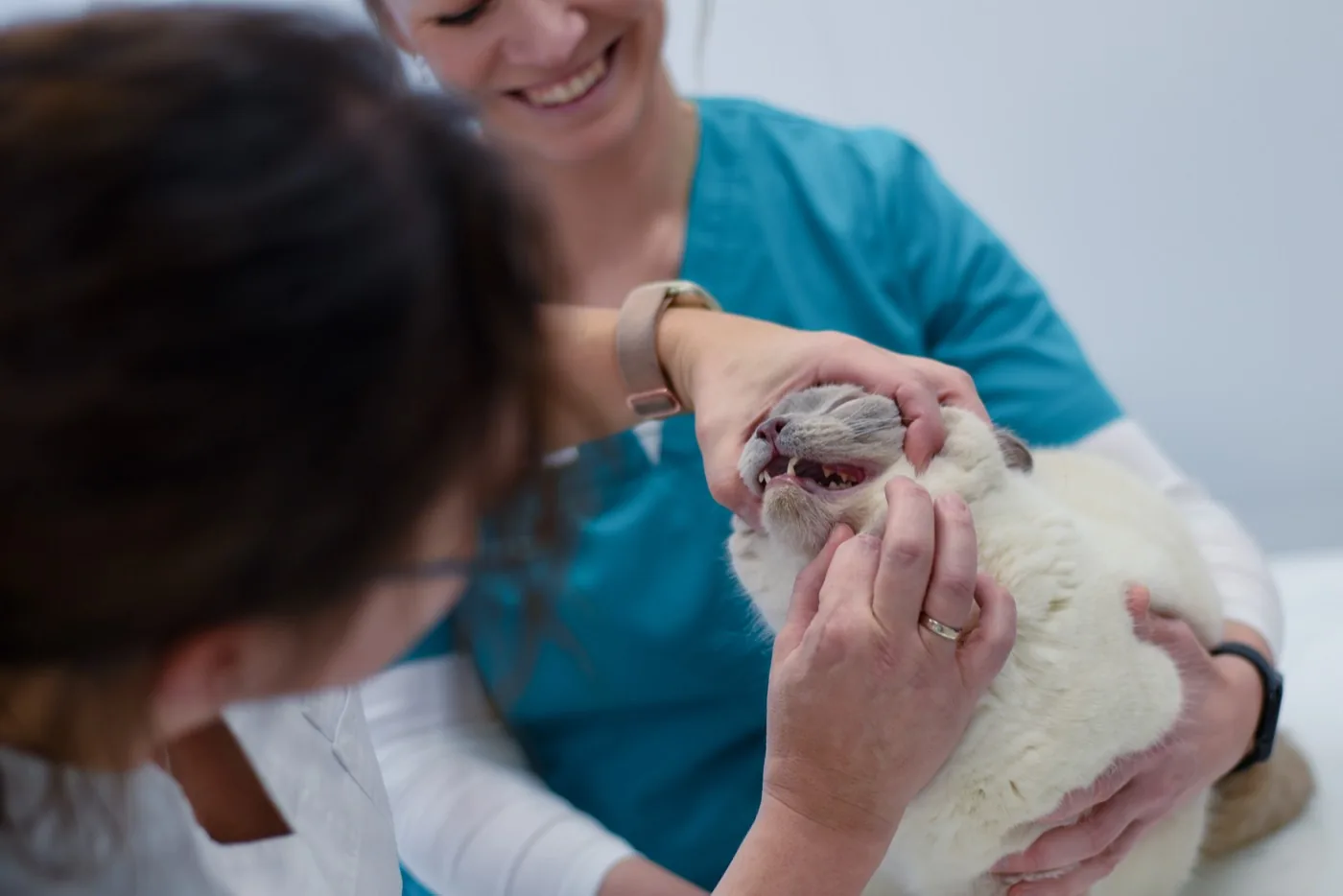
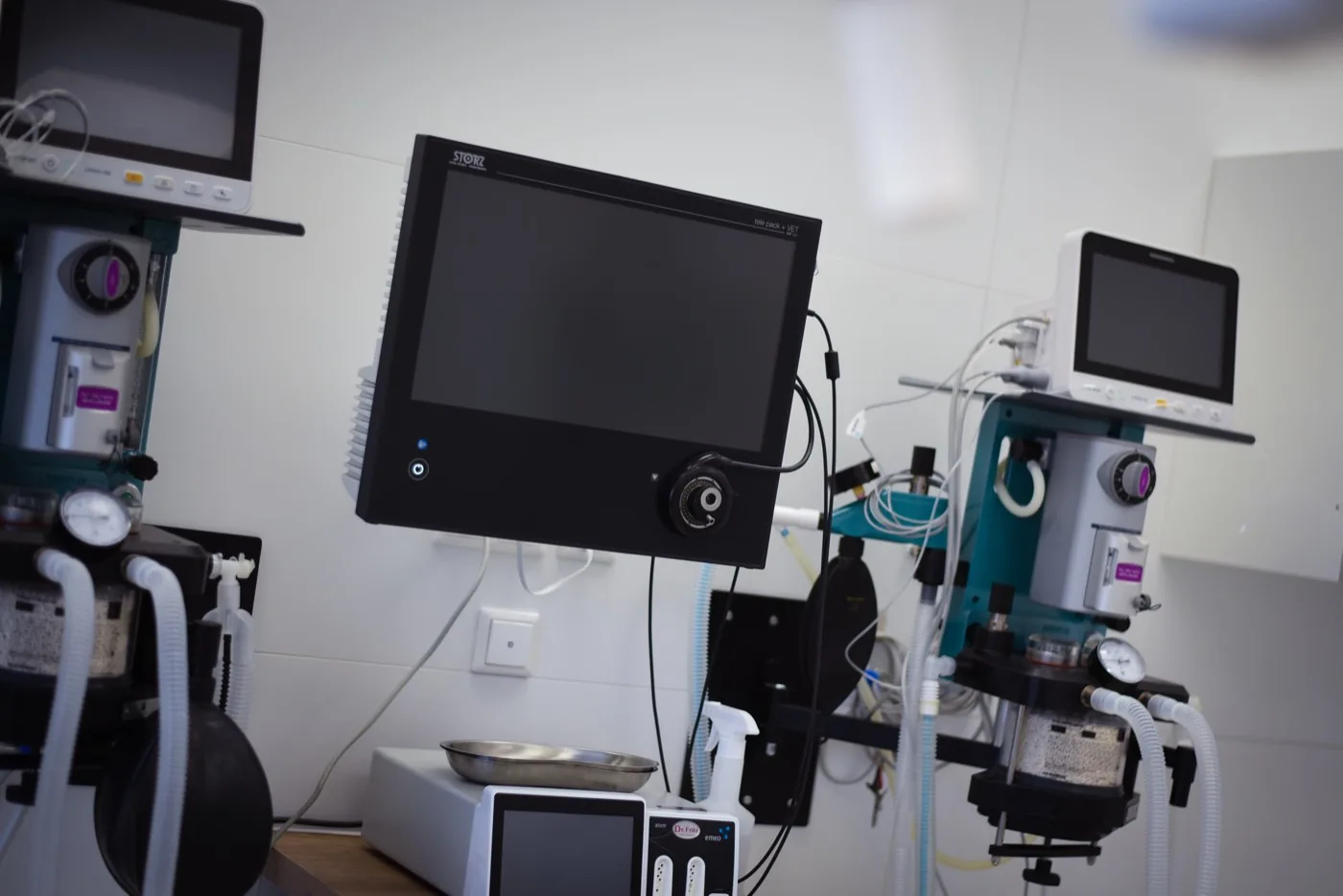
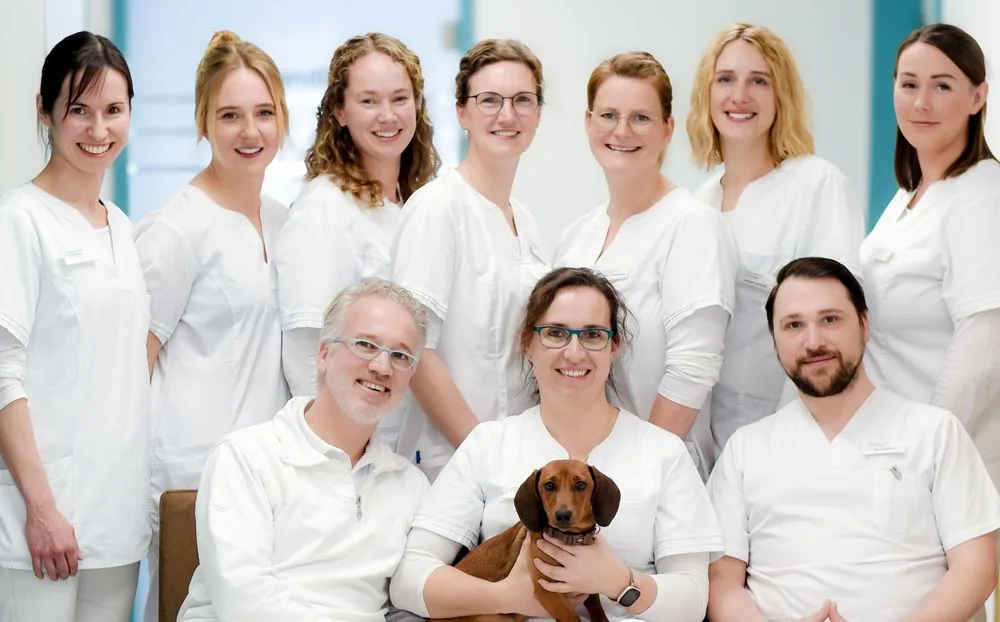
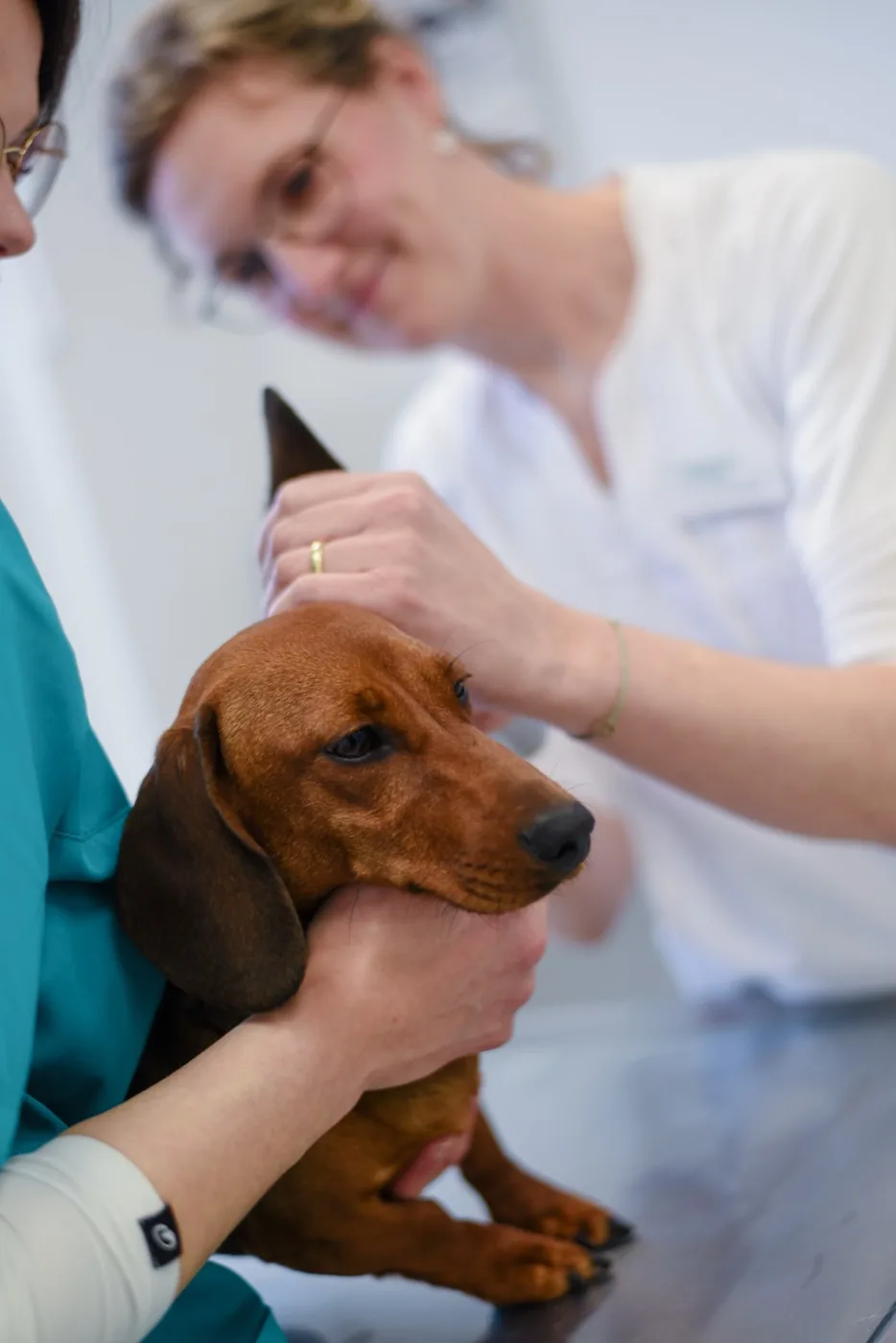
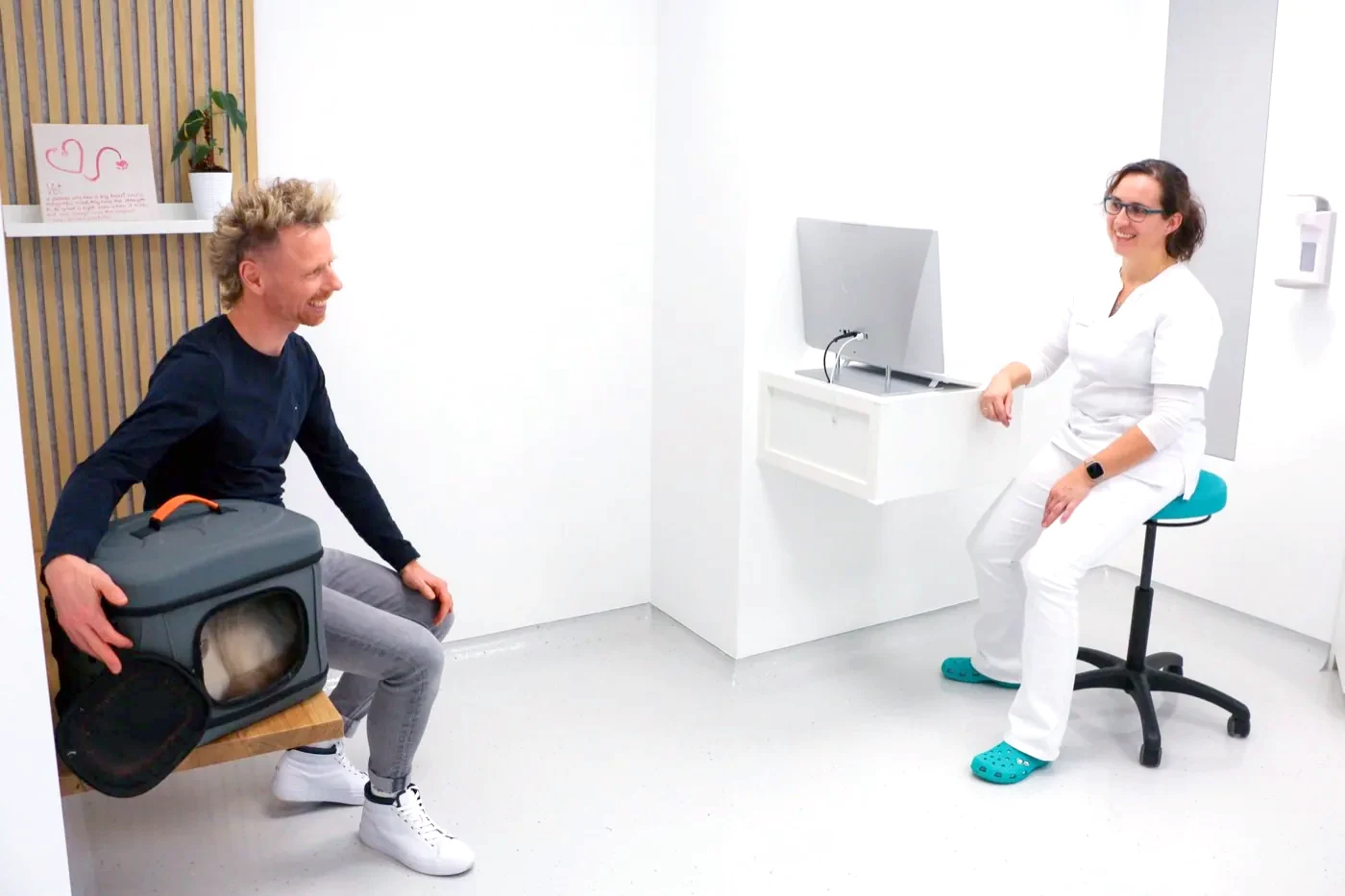
Two veterinary dentists with dental X-ray — from the check-up to dental surgery.
Book an appointment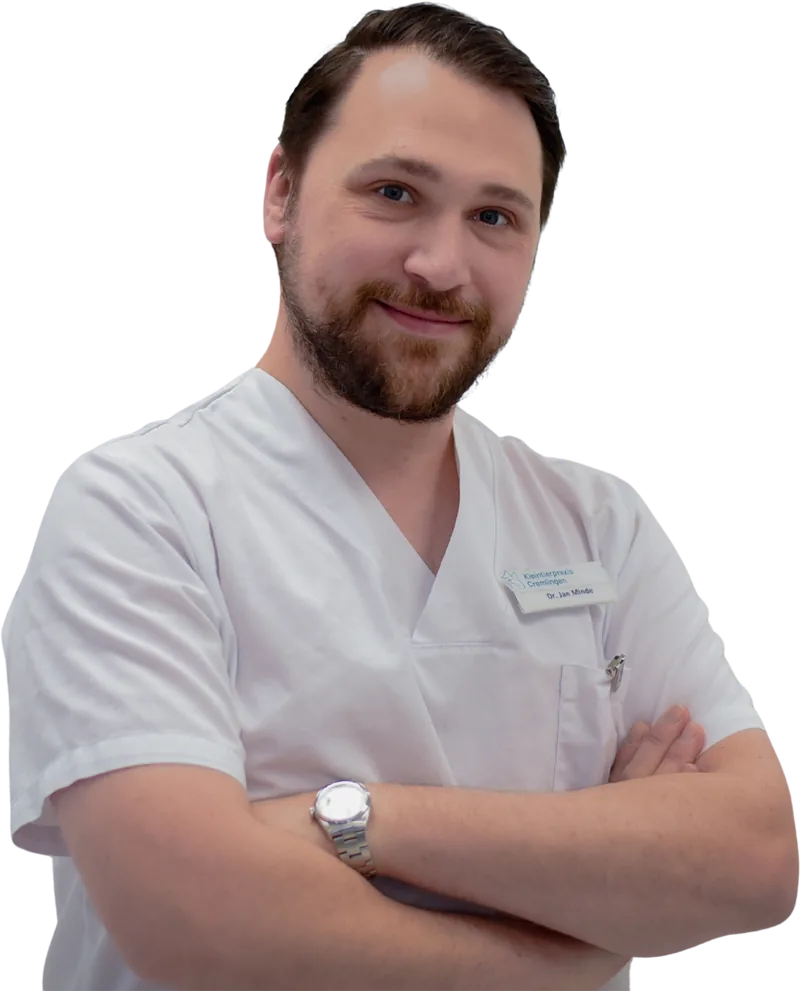
Book an appointment online or give us a call. We are happy to advise you personally.
A selection of your contact persons for this area. Naturally, our entire team is there for you.
Veterinary dentistry & soft-tissue surgery

Small pets, dentistry & dermatology