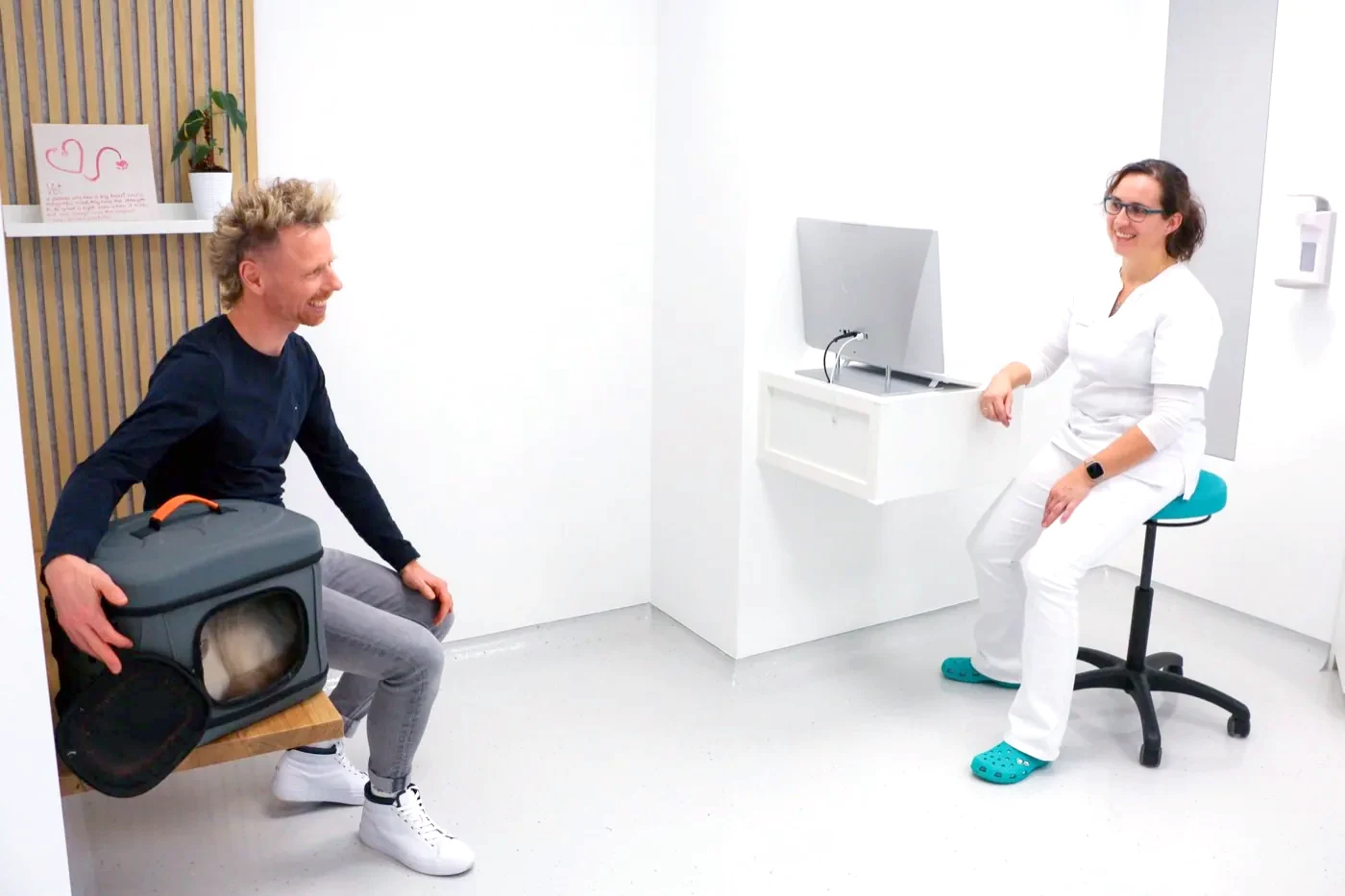
At a preventive appointment we examine your pet from head to paw: heart and lungs, teeth, skin, weight, eyes and the musculoskeletal system. Much can be detected this way before it causes any discomfort, and is then usually calmer and gentler to treat. Catching changes early is the best way to safeguard your pet's health for years to come. This overview explains what preventive care involves, when it makes sense and how an appointment at our practice in Cremlingen works.
Why preventive care is so important
Dogs and cats are masters at hiding weakness. In the wild, an animal showing pain would be easy prey, and this instinct is still present in our pets. Many illnesses therefore develop over weeks or months without anything being noticeable in everyday life. Only once the symptoms become clear do many owners come to the practice. By then the illness has often already progressed.
This is exactly where preventive care comes in. A regular examination gives us the opportunity to notice changes early, for example a beginning heart finding, tartar, weight gain or first signs of an organ disease. The earlier we discover something, the gentler and calmer it can usually be addressed. Preventive care is no guarantee of good health, but it increases the chances that your pet can live a long life with little discomfort.
What preventive care includes
- Annual preventive examination including a heart-and-lung check and palpation
- Vaccinations following the current StIKo Vet recommendations
- Parasite prevention against ticks, fleas and worms
- Travel advice and the EU pet passport
- Senior screening with blood and urine analysis from the age of seven
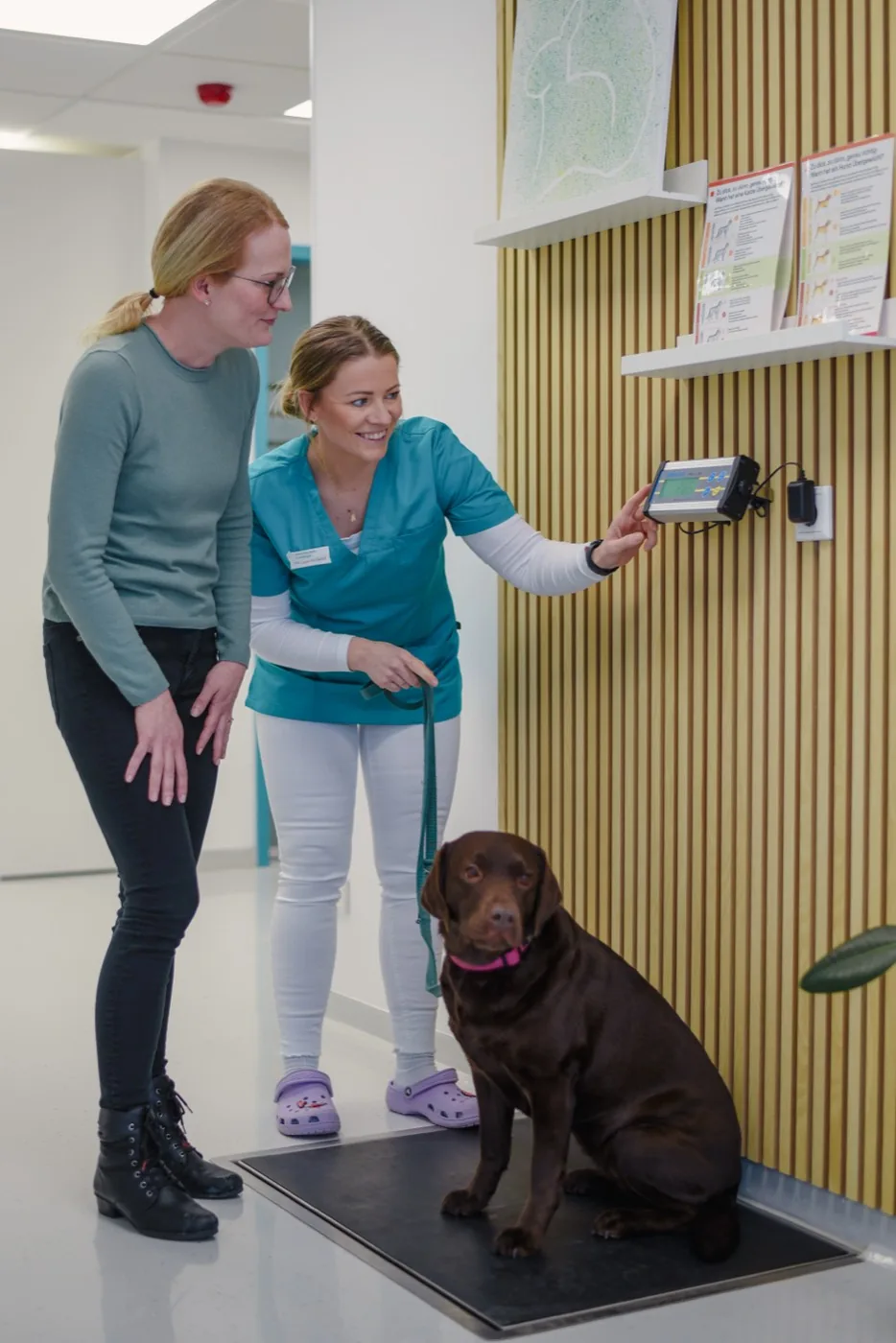
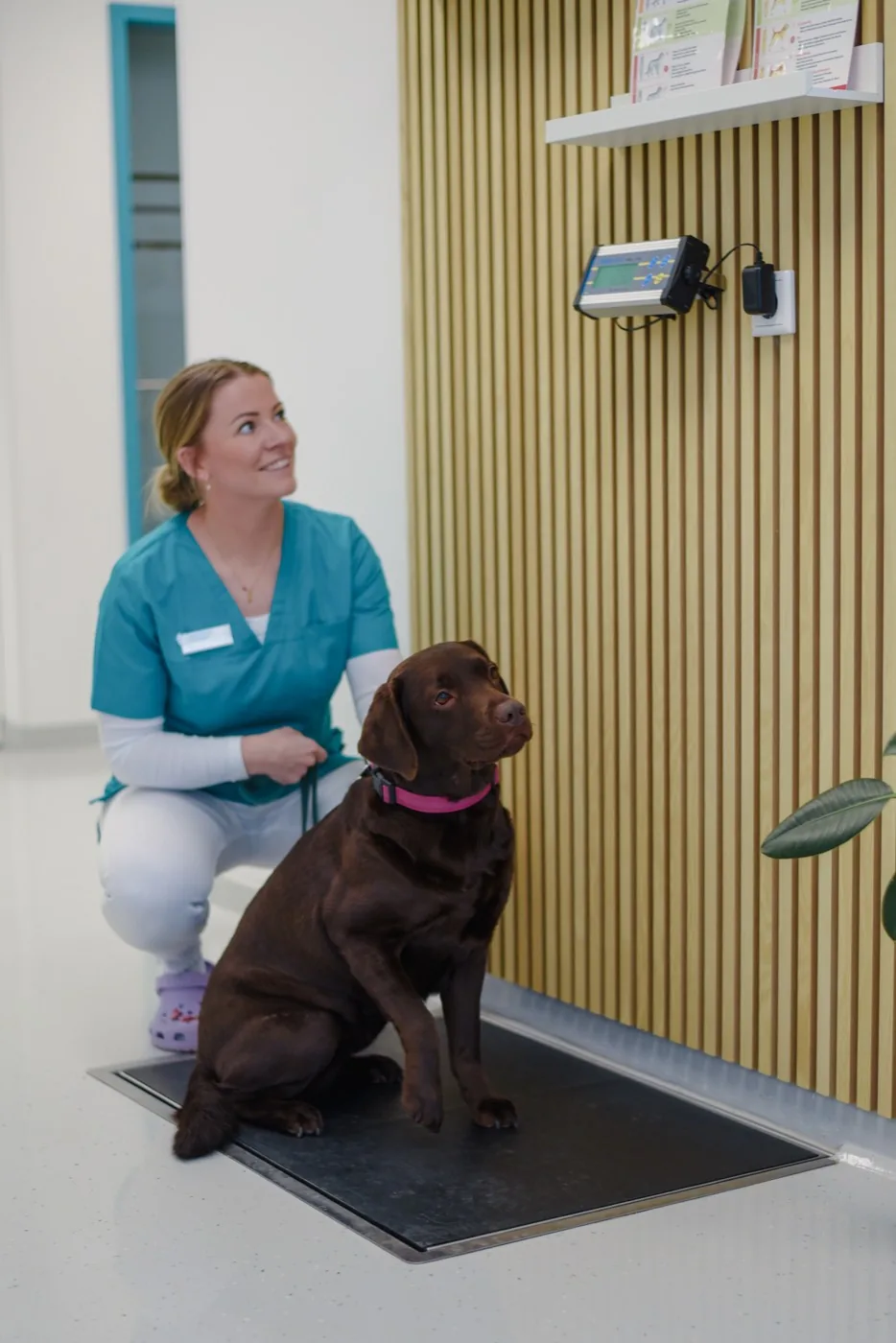
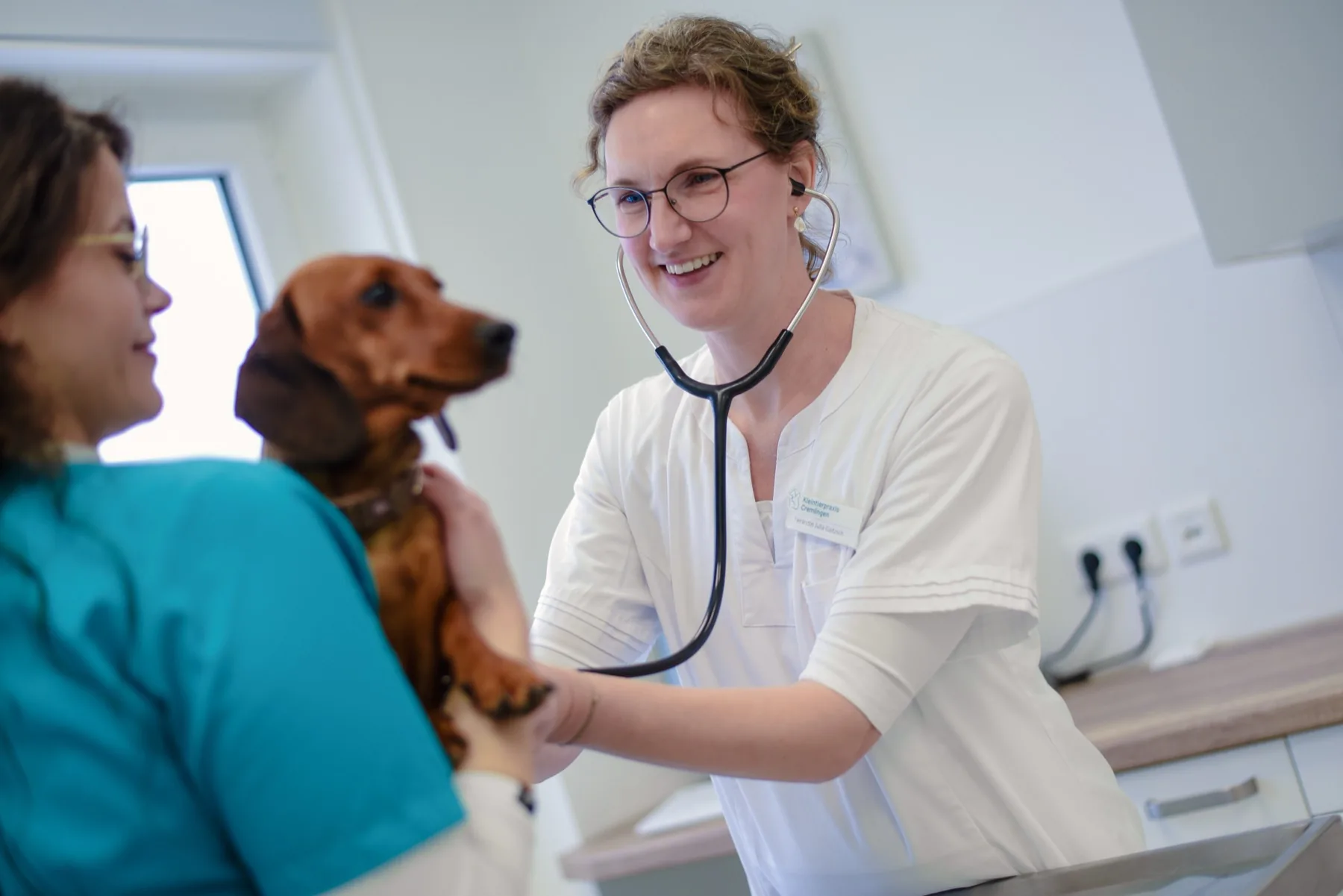
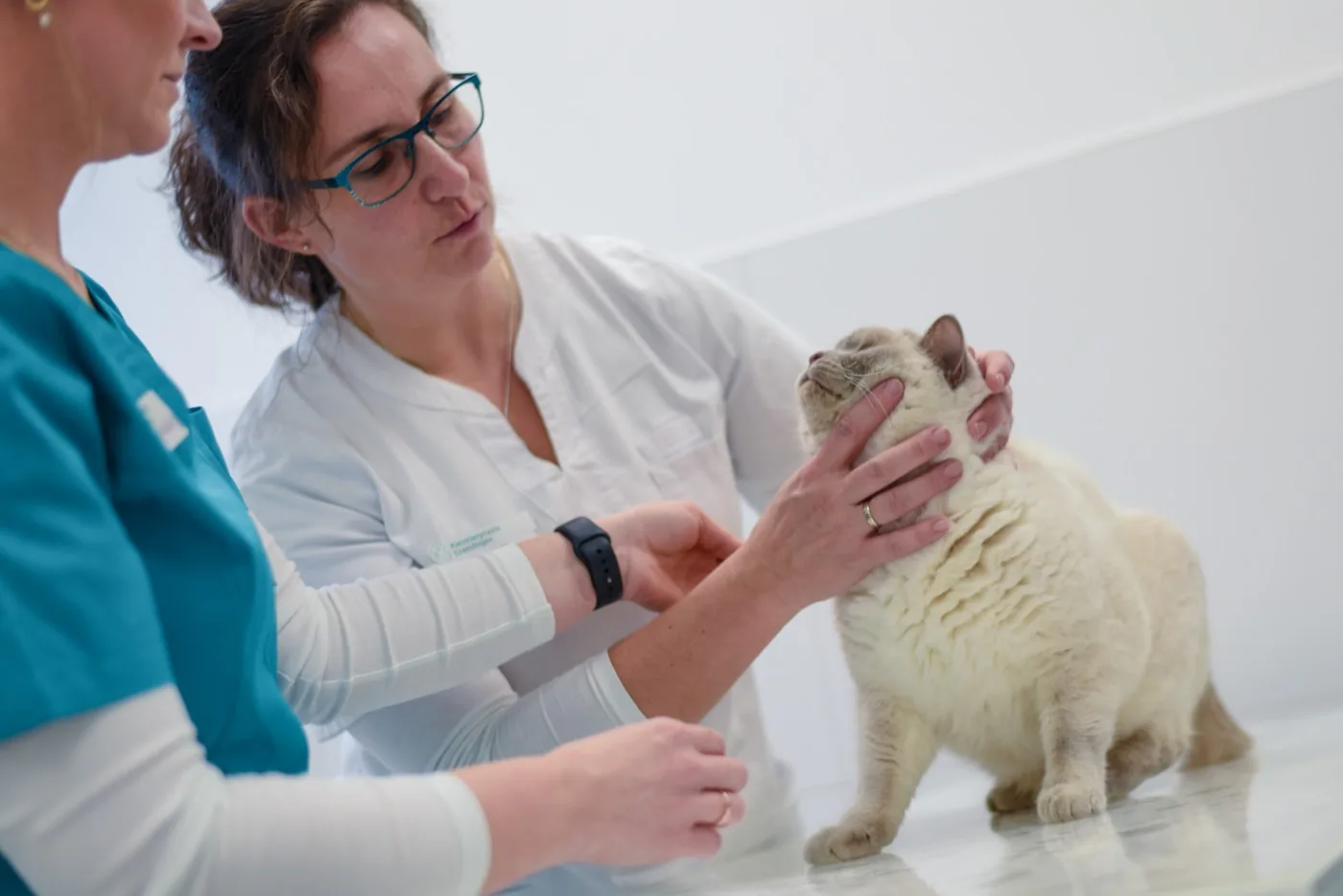
A preventive examination is more than a quick glance. We listen to the heart and lungs, palpate the abdomen and lymph nodes, assess skin and coat, check eyes and ears and take a look inside the mouth. The weight is noted and compared with previous findings, even a gradual gain or loss can be an important signal. Where needed, we supplement the examination with a blood or urine analysis, an ECG or ultrasound.
The conversation matters to us in all of this. You know your pet best and are often the first to notice changes in everyday life. Tell us if your dog climbs the stairs more slowly, your cat plays less or its drinking behaviour changes. These observations are a valuable part of preventive care.
Preventive care begins in puppyhood and kittenhood
Young animals in particular benefit from close support. In the first months of life we clarify how vaccination protection is built up, deworming, growth and nutrition. Questions about neutering, getting used to the practice and species-appropriate care can also be discussed calmly here.
Vaccinations for dogs and cats
Vaccinations protect against infectious diseases that can take a severe course in dogs and cats. Which vaccinations make sense for your pet and at what intervals they should be refreshed depends on the species, age, lifestyle and way of life. An indoor cat has a different risk profile than an outdoor cat, and a dog that travels a lot has different requirements than a quiet companion dog.
We follow the recommendations of the Standing Veterinary Vaccination Commission (StIKo Vet) and distinguish between core vaccinations, which are advisable for every animal, and additional vaccinations, which may make sense depending on the individual situation. Rather than vaccinating to a rigid schedule, we coordinate the vaccination plan individually with you. This way your pet receives the protection it really needs.
Protection against parasites
Ticks, fleas, mites and worms are among the most common reasons for discomfort in dogs and cats. Some parasites can also transmit pathogens or pass on to humans. A well-considered parasite protection is therefore a fixed part of preventive care.
Even purely indoor cats are not automatically protected: parasites get into the home via shoes, other animals or raw food. Which protection is suitable, and at what intervals a worming treatment or a faecal examination makes sense. We discuss individually. Blanket recommendations fall short here, because the risk and way of life of every animal are different.
Signs you should not wait on
Between preventive appointments, too, an attentive eye is worthwhile. Bring your pet in if you notice something — better once too early than too late. Watch out, among other things, for:
- changed eating or drinking behaviour,
- weight loss or unwanted weight gain,
- declining stamina, stiffness or reluctance to move,
- coughing, rapid breathing or increased panting at rest,
- bad breath, reddened gums or changed chewing,
- increased itching, hair loss or skin changes.
Such signs do not necessarily mean something serious, but should be clarified by a vet. This page cannot replace an examination at the practice.
The appointment: what to expect and how to prepare
For a preventive appointment you usually need to prepare nothing special. Bring your pet's vaccination record with you, if available, and note down your questions in advance. If certain observations are important to you, for example about behaviour, digestion or movement, short notes help us not to forget anything.
If a blood test is planned, it can make sense for your pet to fast for a while beforehand. We will clarify whether this is necessary when arranging the appointment. For anxious animals we are happy to choose a quiet time of day. Cats travel most relaxed in a familiar carrier, which you can leave open in the home a few days beforehand.
Preventive care in the senior years
With the years, the risk of diseases of the kidneys, heart, thyroid or joints increases. Older animals therefore benefit from more frequent preventive care. For dogs and cats a senior check is usually advisable from the seventh year of life, often earlier for large dog breeds.
In addition to a thorough examination, a senior check often includes a blood and urine analysis. This allows beginning organ changes to be detected while they are not yet causing any discomfort. Many age-related conditions can be managed well if they are known early. This can noticeably support quality of life.
Is your pet already a senior?
Find out in seconds how old your dog or cat is in human years, and whether a senior check already makes sense.
Is your pet in pain, even when not showing it?
With the BEAP Pain Score, systematically assess across 8 observations whether your dog or cat is in pain. Particularly valuable for chronic conditions such as osteoarthritis.
Preventive care in Cremlingen and the region
Our practice is located in Cremlingen, easily reached by pet owners from Braunschweig, Königslutter am Elm, Wolfenbüttel and Wolfsburg. We deliberately take time for preventive care, so that you can ask your questions and your pet can experience the appointment calmly.
How often your pet should come in for preventive care depends on age, health and way of life. As a guide: healthy adult animals once a year, senior pets ideally every six months. We determine the right rhythm together. If you have questions or notice something about your pet, you are welcome to arrange an appointment. We will advise you personally.