When an animal needs closer care after surgery or during an illness, that is often a worry for owners: how is my animal doing while it is not with me? That is why it is important to us that you know how inpatient care works at our practice in Cremlingen, and that your animal is in good hands the whole time. This overview explains when a stay is useful, what it involves and how we keep you involved.
Why an inpatient stay can be useful
Not every treatment can be completed in a short appointment. Some animals need close observation after a procedure, others need an infusion over several hours or should remain under supervision for further assessment. In such situations, inpatient care offers the protected setting that an animal needs precisely then.
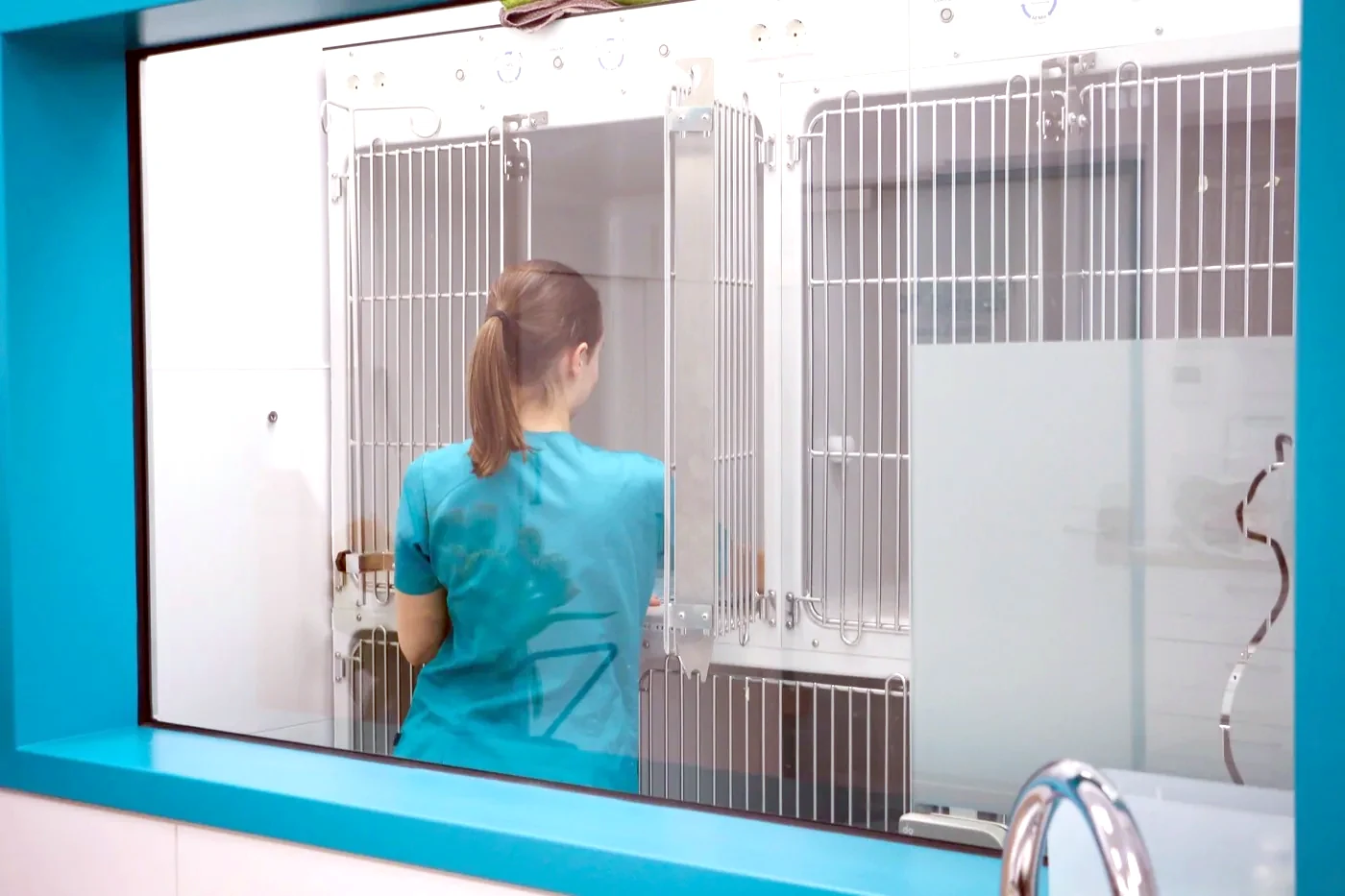
In our ward we can care for your animal for hours or days at a time. Whether and for how long a stay is useful depends on the individual case and is discussed with you. The aim is always for your animal to be able to return home as soon as possible.
An inpatient stay is not an end in itself. We weigh up carefully whether care at the practice benefits the animal more than care at home. For many treatments the home environment is best for recovery, especially when an animal feels safer there. But there are situations in which the ability to intervene quickly and regular monitoring are decisive.
Planned and short-notice stays
Some stays can be planned, such as the recovery phase after planned surgery. Others arise at short notice, because an animal's condition makes close observation necessary. In both cases we explain to you why we recommend inpatient care and what it means for your animal.
What inpatient care includes
- Inpatient care for hours or days at a time
- Individual monitoring of circulation and general condition
- A calm, separate zone for cats
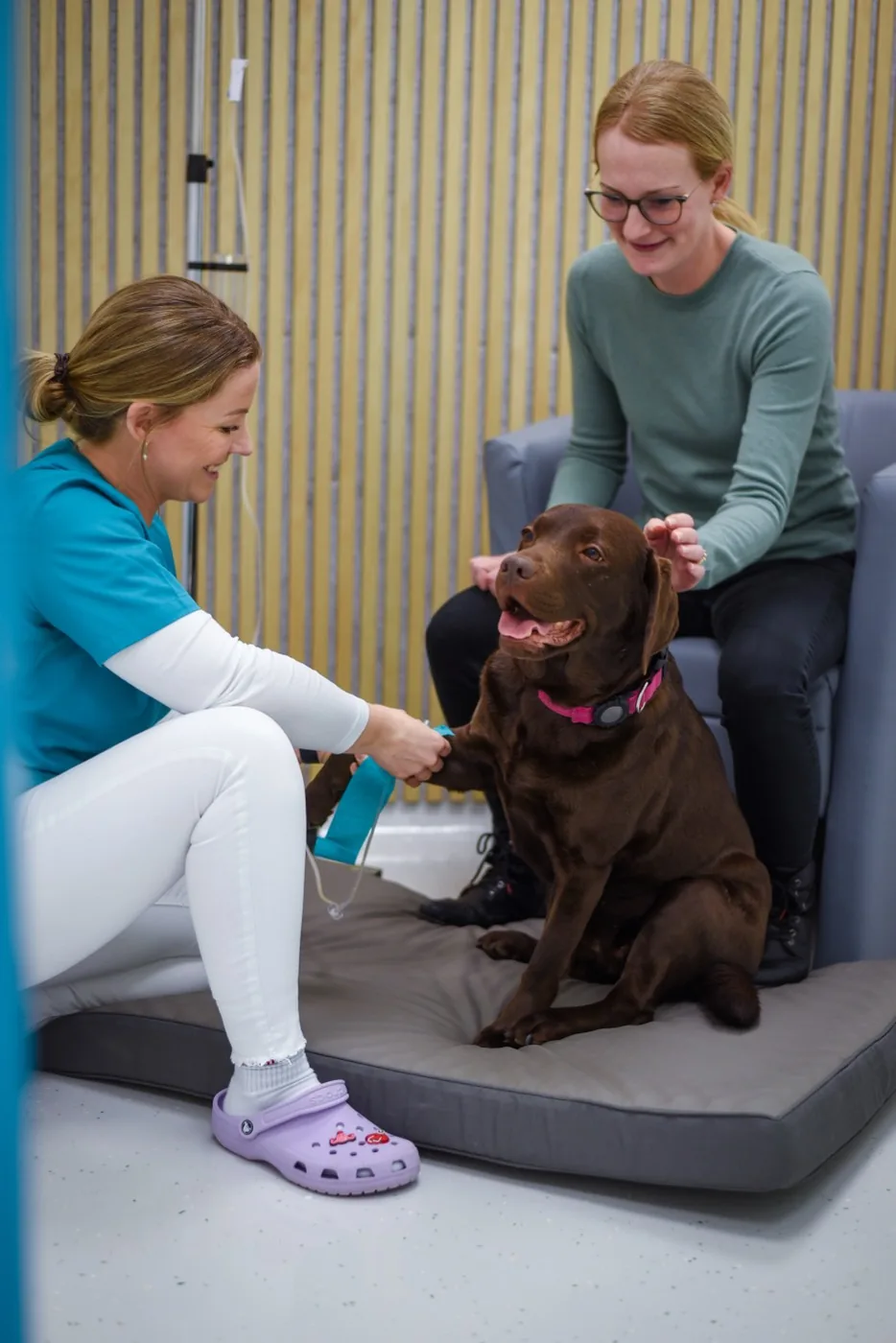
- Infusion and pain therapy
- A supervised recovery phase after surgery
Common reasons for a stay are monitoring after surgery, infusion therapy for example in cases of fluid deficiency or certain illnesses, as well as the observation of animals whose condition still needs to be clarified. Animals that are cared for between several diagnostic steps in a single day can also be looked after in the ward.
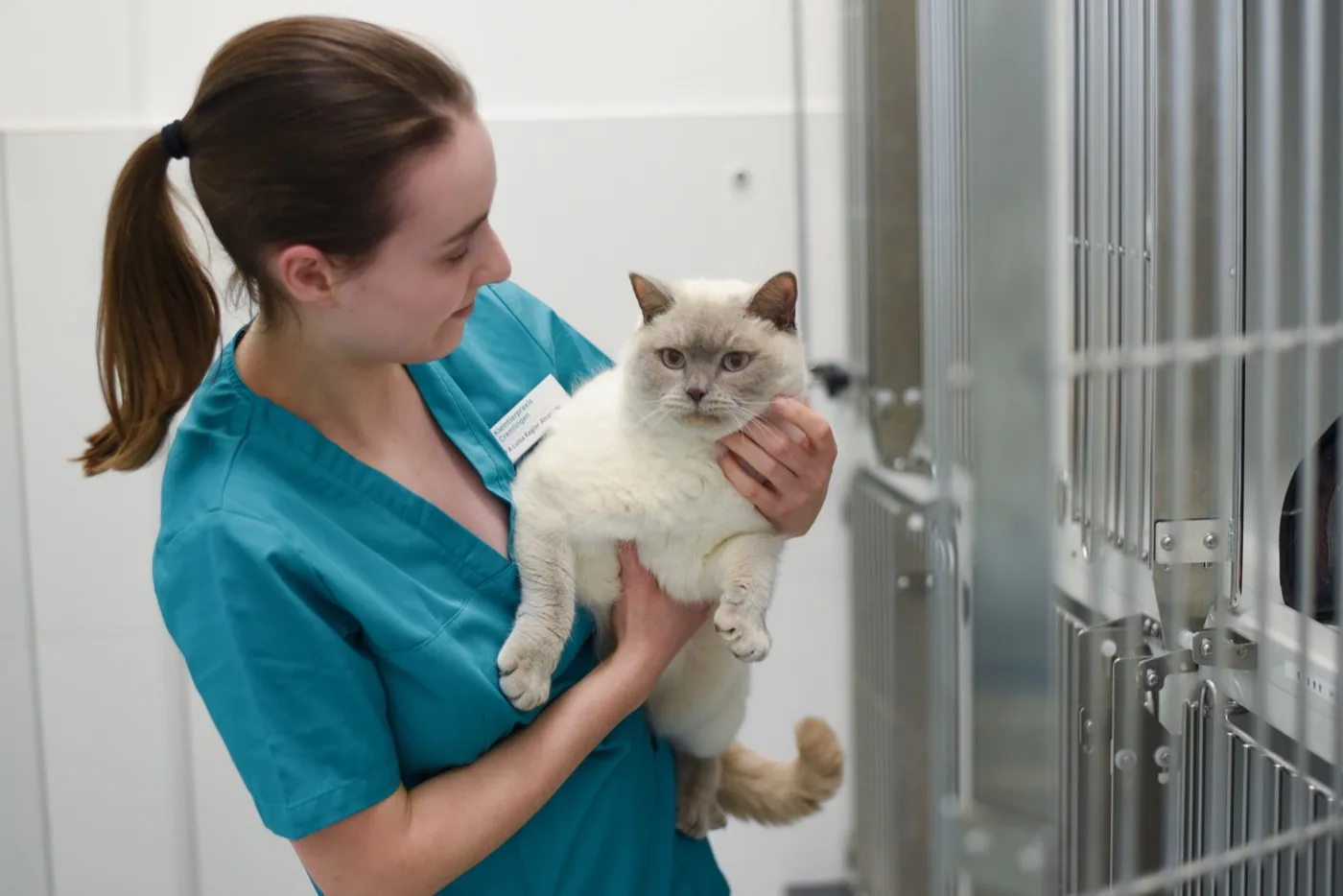
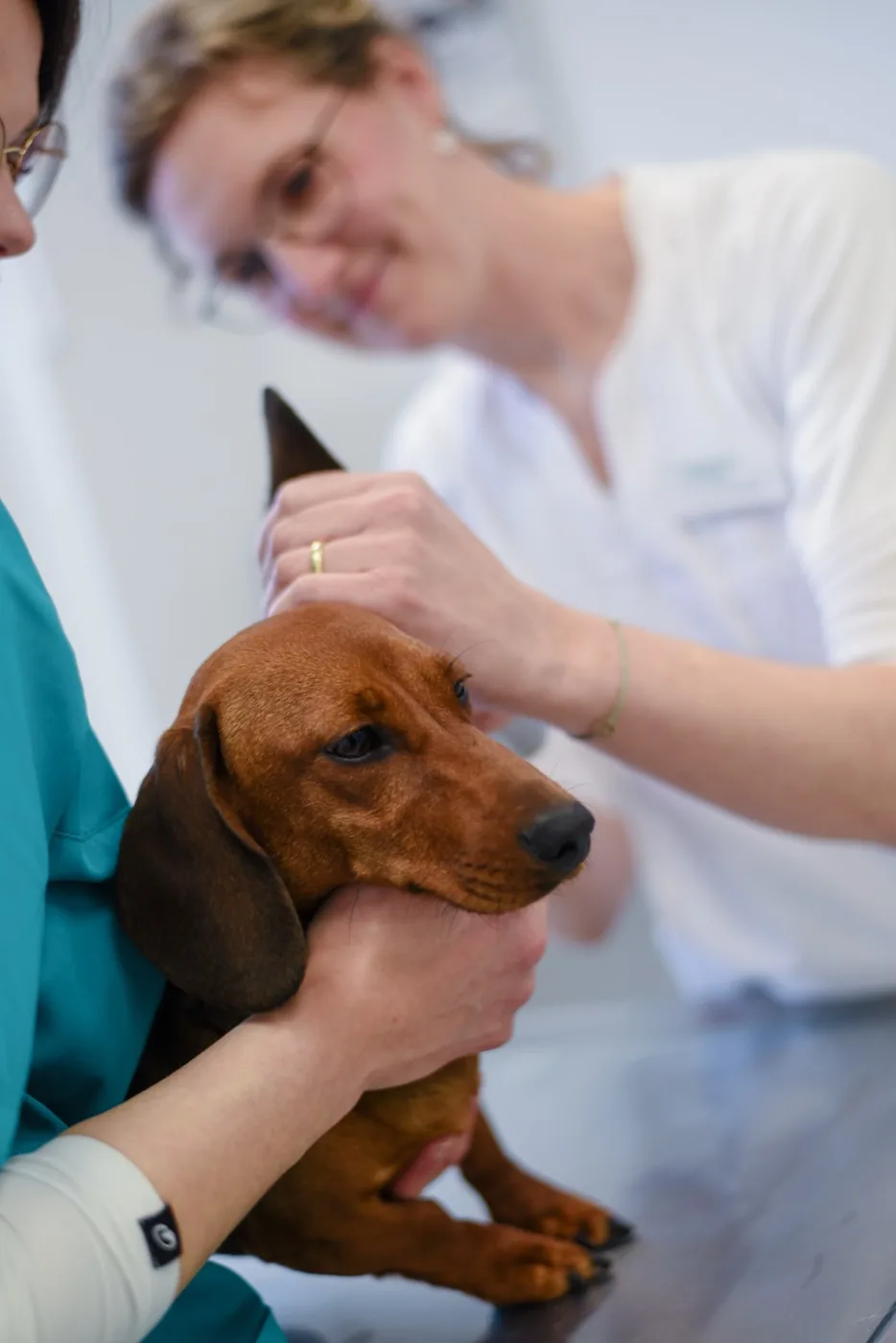
During the stay we pay attention not only to medical care but also to the well-being of your animal. Clean, warm and calm accommodation, gentle handling and a familiar way of speaking to the animal are, for us, just as much a part of it as the professional care.
A calm zone for cats
Cats are particularly sensitive to stress. The sounds and smells of dogs can unsettle them and make their recovery more difficult. That is why a separate, calm zone is available for cats. There they can come to rest in a protected environment with as few stimuli as possible.
A relaxed environment is more than a comfort: stress can influence the course of healing. An animal that feels safe is more likely to eat, rests better and often recovers more quickly. It is precisely for this reason that we take care to keep the unavoidable agitation of a stay as low as possible.
Monitoring and therapy
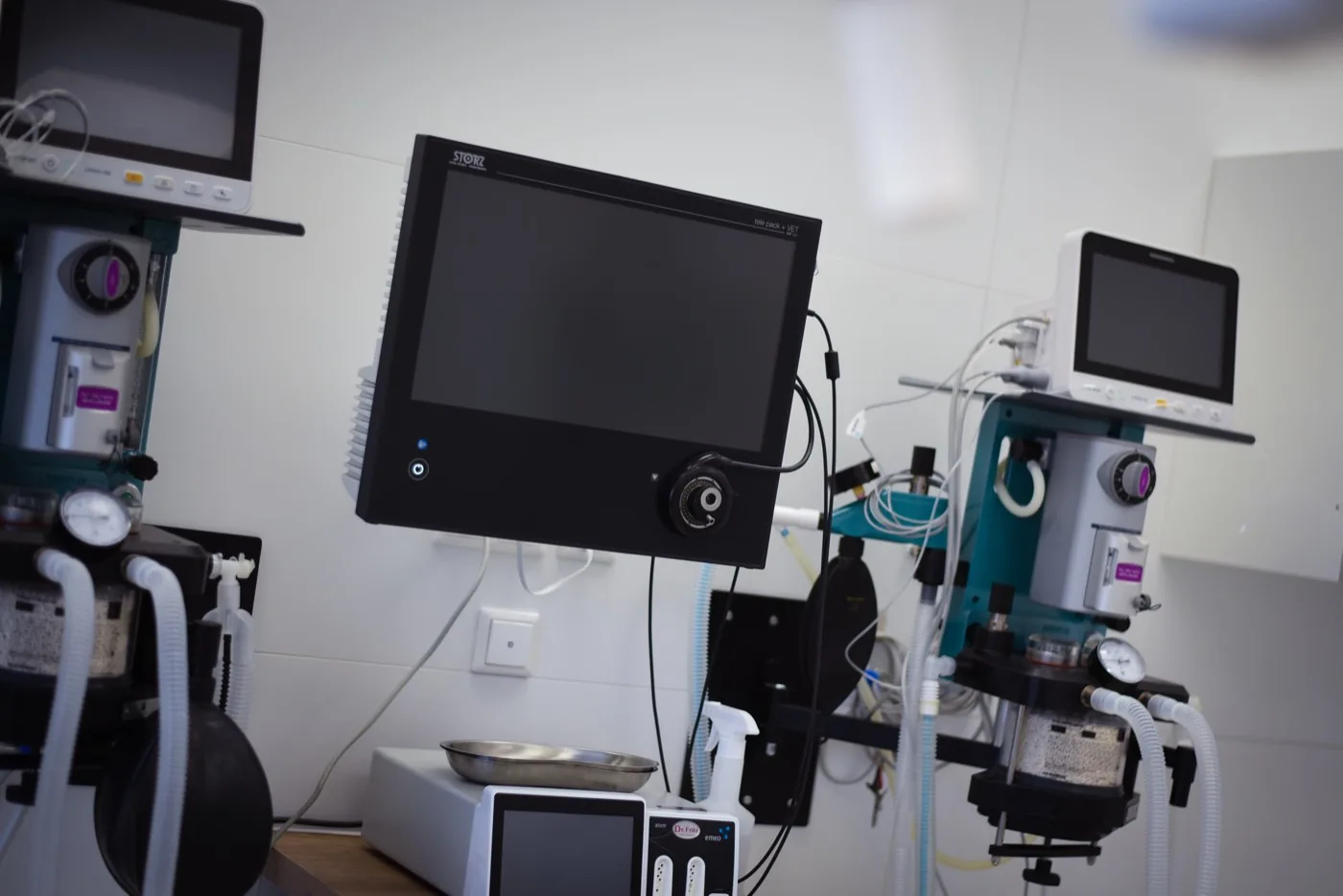
During inpatient care we keep an eye on your animal's circulation, pain and general condition. Effective pain therapy ensures that your animal remains as comfortable as possible. Animals waking up from anaesthesia are supervised during this sensitive phase until they are stable again.
How closely the monitoring is carried out and which measures are needed depends on the animal's condition. If something changes, we can react quickly. That is exactly the advantage of care at the practice. Care also includes observing eating and drinking behaviour, faeces and urine as well as behaviour, because these observations give important clues to the course of healing.
Where needed, we add diagnostic steps during the stay, such as a blood check, or adjust the therapy. In this way the care remains flexible and is guided by what your animal needs at that moment.
You stay informed
Even while your animal is temporarily with us, you remain closely involved. We keep you up to date on its condition and discuss every further step with you. If you have questions or concerns you can contact us at any time, in a situation like this the understandable need for information is great.
Some owners worry that their animal might miss them. This concern is understandable. Our experience, however, shows that most animals cope well with the time in the ward when they are housed calmly and cared for gently. And as soon as the condition allows it, the aim is clear: returning home to you.
Preparation and returning home
If a planned stay is coming up, we discuss in advance with you what to bear in mind. A familiar object such as a blanket can make the time easier for some animals. If your animal receives medication or needs its usual food, please let us know.
Before your animal returns home we explain what you should pay attention to at home, such as rest, feeding, medication and follow-up appointments. The first days after a stay are often decisive: give your animal the opportunity to recover in peace and observe it attentively. If your animal's condition worsens at home, if it does not eat or shows clear signs of pain, please contact the practice. This page does not replace veterinary advice in the individual case.
Inpatient care in Cremlingen and the region
Our practice in Cremlingen is easy to reach for pet owners from Braunschweig, Königslutter am Elm, Wolfenbüttel and Wolfsburg. If inpatient care is coming up for your animal or you have questions about it, we are glad to advise you personally — simply arrange an appointment.