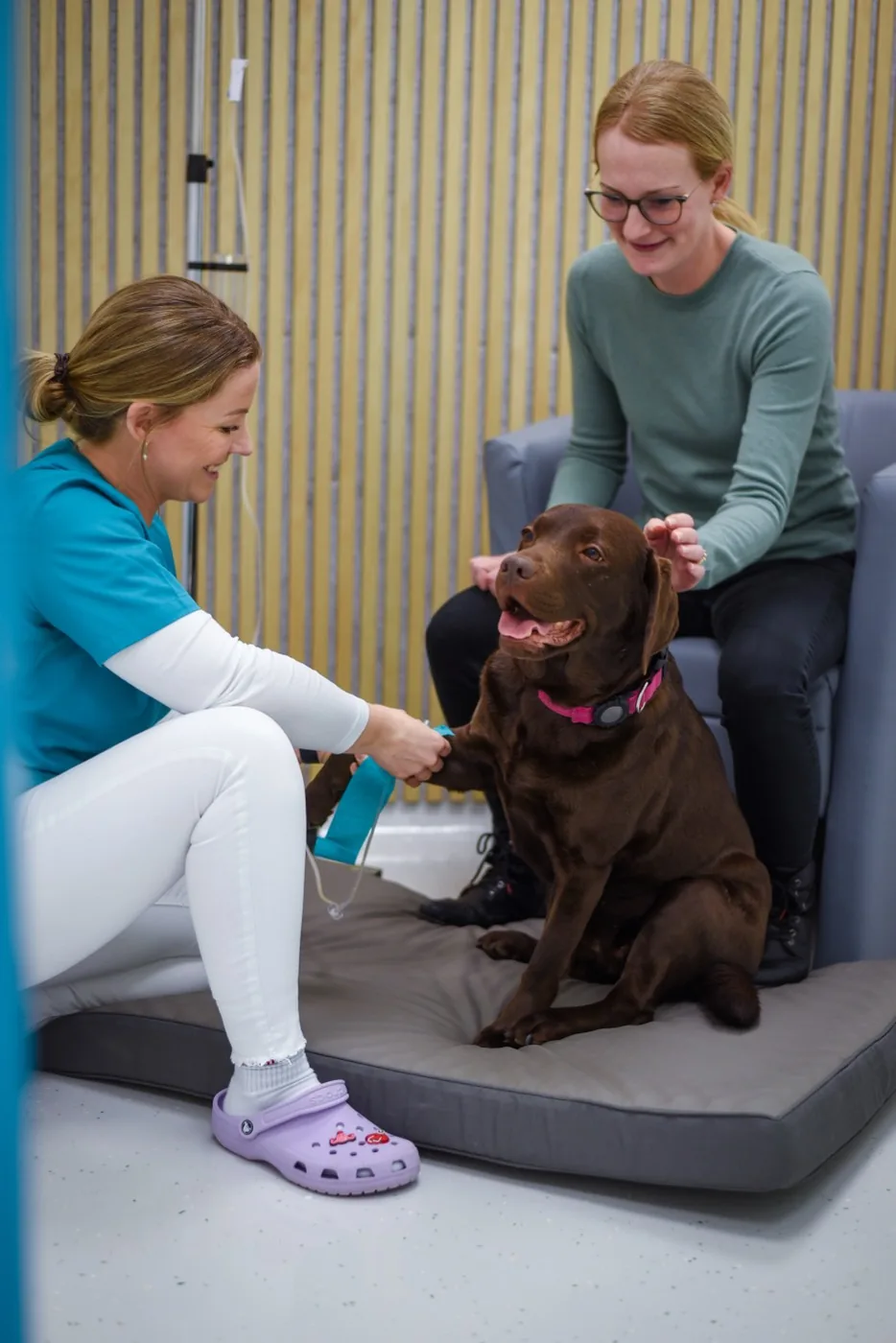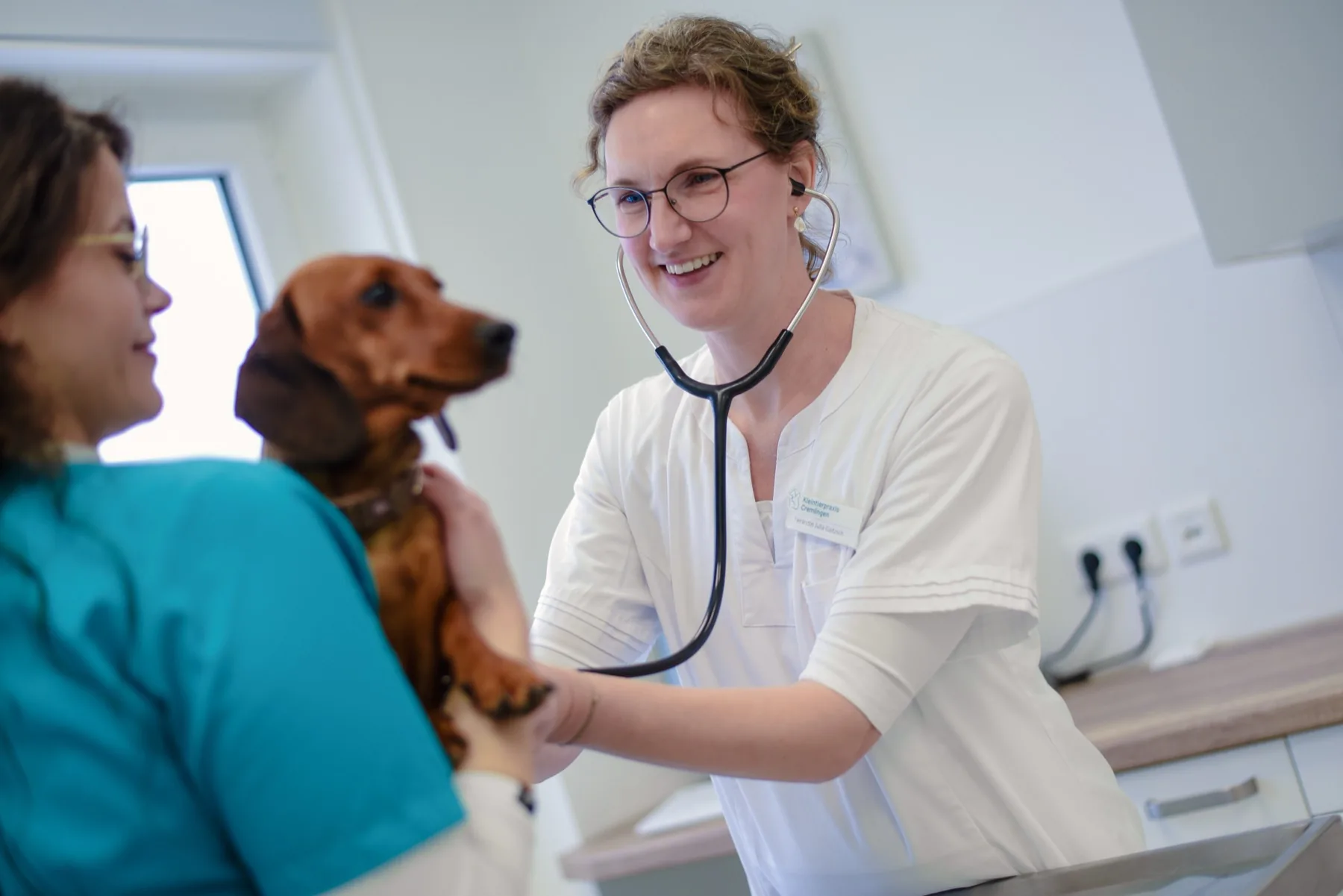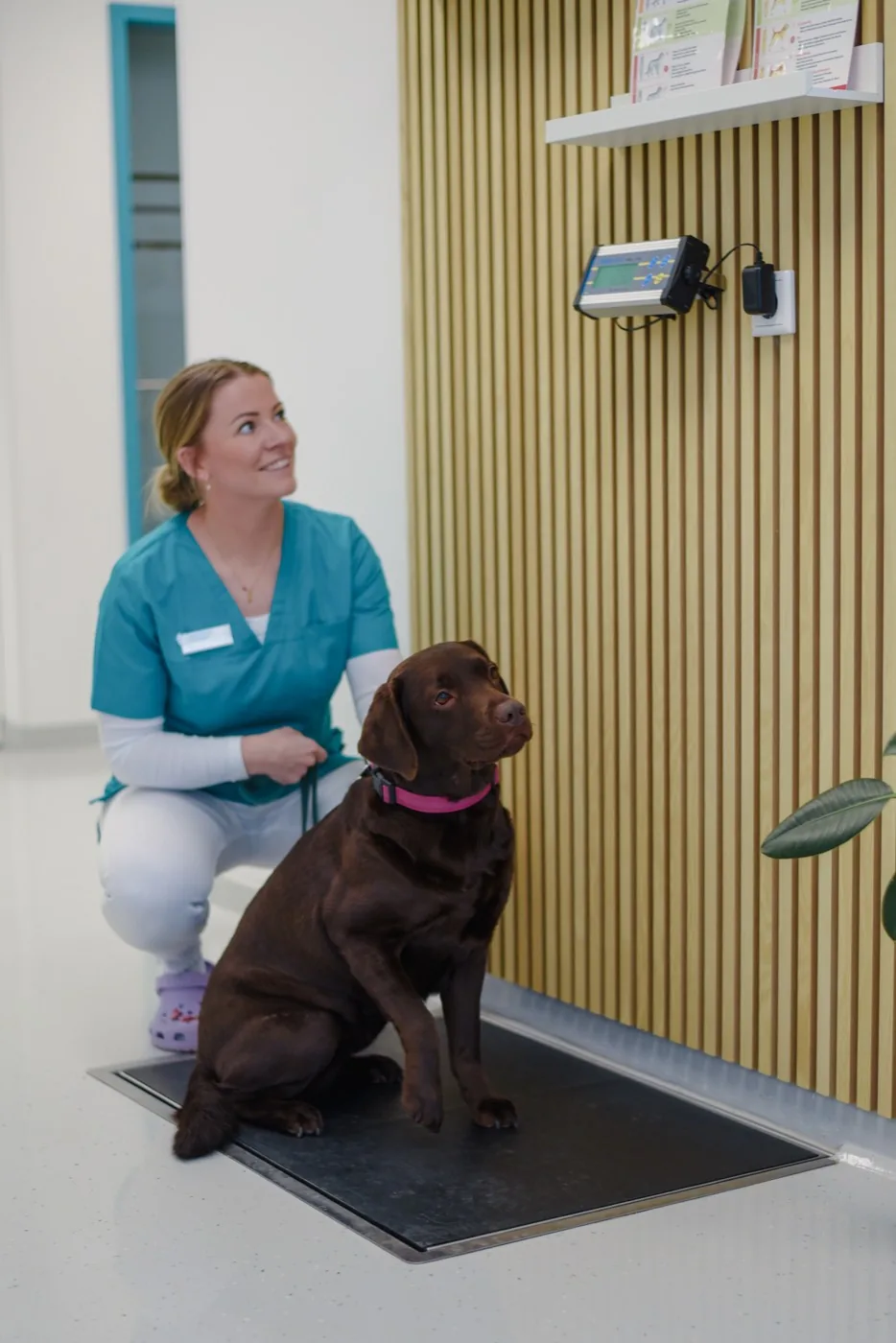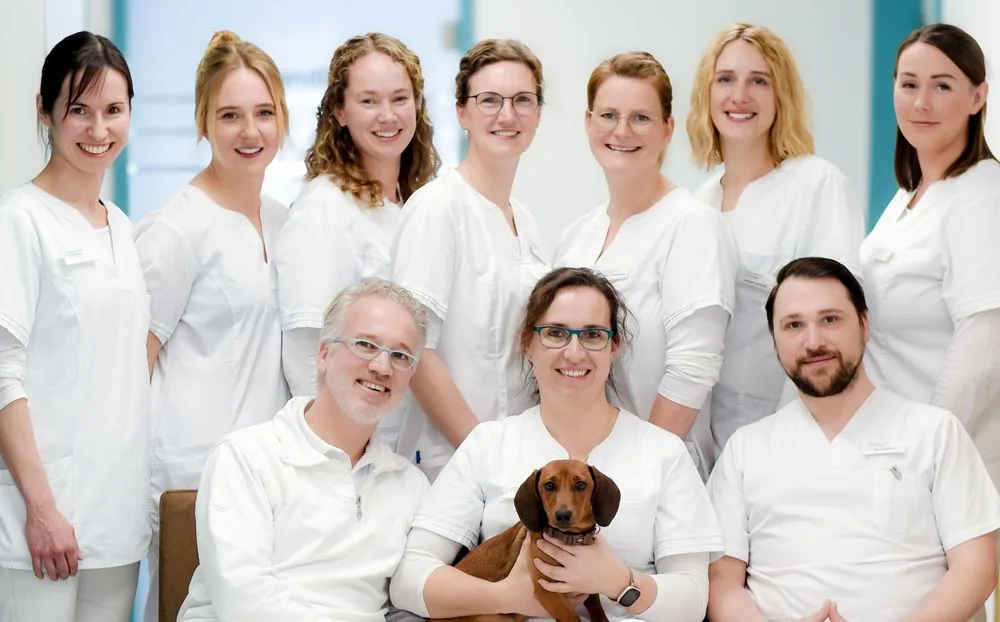
For dogs and cats, movement is part of a fulfilled life. When pain or stiffness restricts that movement, their zest for life suffers too. Physiotherapy can achieve a great deal here — gently helping your animal back into motion after surgery, with chronic joint complaints and in old age. This overview explains what animal physiotherapy involves, when it is useful and how a treatment at our practice in Cremlingen works.
Why movement is so important
A mobile body keeps joints, muscles and circulation in good working order. If an animal permanently takes it easy because a movement hurts, this weakens the muscles over time, and weakened muscles place additional strain on the joints. In this way a vicious circle can develop, in which mobility decreases further and further.
This is exactly where physiotherapy comes in. It helps to relieve pain, to maintain or rebuild muscle and to improve patterns of movement. It does not replace necessary medical treatment, but complements it sensibly.
What physiotherapy includes
- Animal physiotherapy after surgery and with arthrosis
- Chiropractic for blockages and restricted movement
- Laser therapy for pain relief and healing support
- An individual exercise programme for home
- Support for senior and chronically ill patients
With animal physiotherapy, chiropractic and laser therapy we put together a programme that suits your animal. Which components make sense depends on the condition, the age and the resilience of the animal and is discussed with you.
Depending on need, physiotherapy includes targeted movement exercises, gentle manual techniques and measures for pain relief. Laser therapy can support the healing of tissue and relieve complaints. Chiropractic is aimed at animals with blockages and restricted movement. These components complement one another — and, where necessary, they also complement the rest of the veterinary treatment, such as pain management.
When physiotherapy is useful
Physiotherapy can provide support in many situations. Common reasons are recovery after orthopaedic surgery, chronic joint complaints such as arthrosis, the after-effects of injuries as well as declining mobility in old age. It can also help animals that are overweight or have been resting for a longer period to get moving again. Whether the therapy is suitable for your animal is something we clarify after an examination.
Signs of mobility problems
Restrictions in movement often develop gradually. Watch out for the following signs and speak to us if you notice any of them:
- stiffness, especially after getting up or in cold weather,
- hesitation before stairs, jumping into the car or onto the sofa,
- an altered gait or lameness,
- declining enjoyment of walks or play,
- sensitivity to touch or changed behaviour.
Such observations should be assessed by a vet. This page does not replace an examination at the practice.
How a treatment works
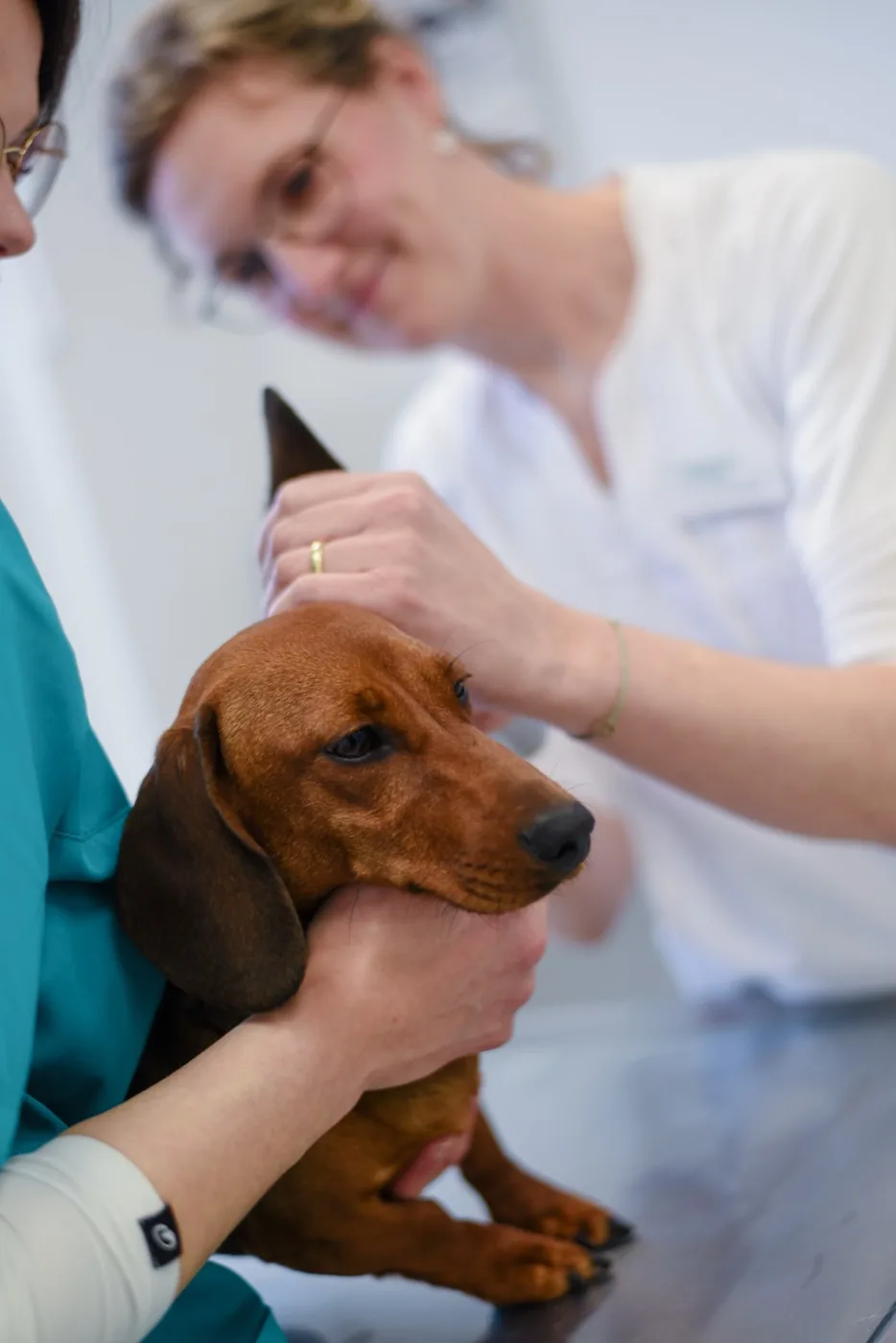
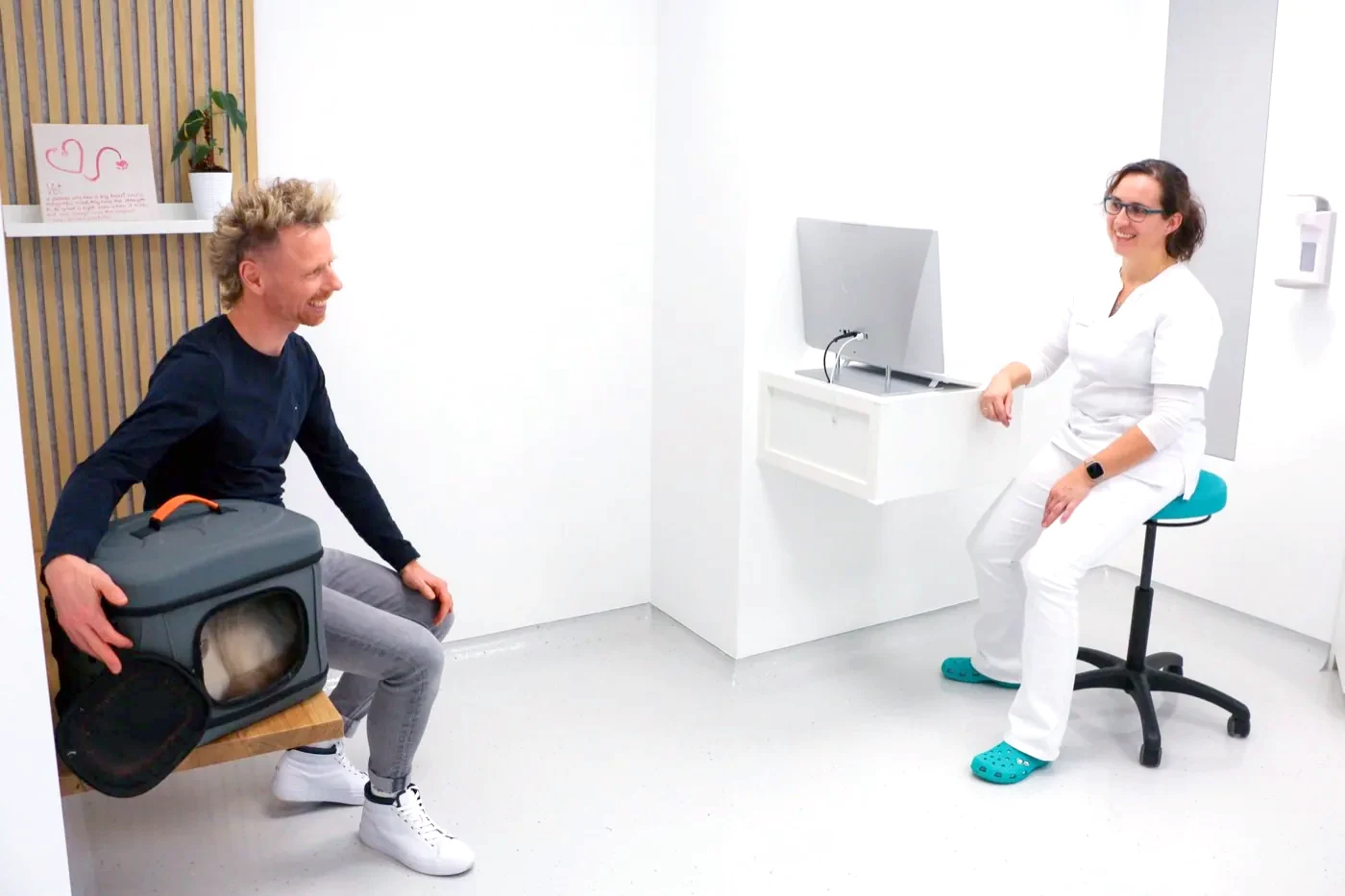
At the start there is an examination in which we assess movement, muscles and painful areas. On this basis an individual therapy plan is developed. The treatment itself proceeds gently and in a calm atmosphere. It is meant to relieve complaints and make movement easier, not to cause additional stress.
How many appointments are needed depends on the condition and its progression. We observe how your animal responds to the therapy and adapt the plan accordingly. Some animals need only limited support, for example during recovery after surgery. Others, above all animals with chronic joint complaints, benefit from longer-term care continued at wider intervals.
Patience is part of it: progress often shows itself in small steps. An animal that gets up a little more easily again or manages a longer walk is already a good sign. These small improvements add up over time and can make a noticeable difference in everyday life.
Physiotherapy for senior animals
Older animals in particular visibly blossom when pain eases and mobility returns. Many seniors get used to their limitations, so that owners only notice after the start of therapy how much more zest for life is possible again. Physiotherapy is an important building block here for maintaining quality of life in old age.
What you can do at home
The treatment at the practice can be well complemented by measures at home. We show you suitable exercises and advise you on exercise, weight and small adjustments in everyday life, such as non-slip mats or aids for getting up. In this way you actively help to keep your animal moving.
One important point is body weight. Every additional kilogram strains the joints and can worsen complaints. With overweight animals, gentle weight reduction is therefore often a central building block of the treatment. We are glad to advise you on this. Equally important is the right amount of exercise: it should be regular but not overtaxing. Short, calm walks are better for many animals than rare, strenuous outings.
At home, only practise the exercises discussed with us and do not overtax your animal. This page does not replace a veterinary examination, with unclear complaints we first clarify the cause together.
Physiotherapy in Cremlingen and the region
Our practice in Cremlingen is easy to reach for pet owners from Braunschweig, Königslutter am Elm, Wolfenbüttel and Wolfsburg. If your animal moves less than it used to or needs support after surgery, we are glad to arrange an appointment. We will advise you personally.