Rabbits, guinea pigs and other small pets are sensitive patients. They are especially good at hiding illness, react sensitively to stress and have a delicate metabolism. That is what makes gentle, expert care so important. This overview explains what small pet medicine involves, how to recognise illness early and how an appointment at our practice in Cremlingen works.
Why small pets need special attention
In the wild, small pets are prey animals. They hide weakness for as long as possible, because doing so would help to ensure their survival. For us as owners this means that a rabbit or guinea pig that clearly seems ill is often already seriously affected. On top of this, they have a sensitive digestive tract that depends on a constant intake of food.
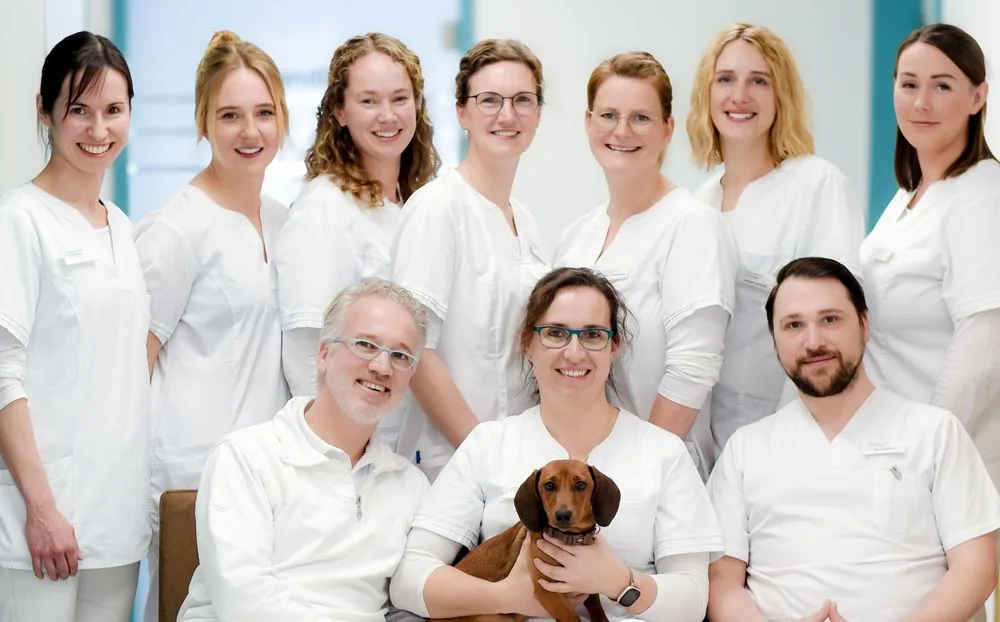
That is why with small pets every day often counts. With Dr Susanne Buschtöns we have a veterinarian on the team whose focus is small pet medicine, who knows these particularities and cares for your animal gently.
Small pets are also tiny and light, even slight changes in weight or small amounts of fluid loss can quickly take effect. What would still allow time in a dog can be a genuine emergency in a rabbit or guinea pig. This sensitivity is no reason for worry, but a reason to look closely and, when in doubt, to seek veterinary advice sooner rather than later.
What small pet medicine includes
- Preventive care and health checks for rabbits, guinea pigs & co.
- Dental check-ups and treatment for small pets
- Investigation of digestive and feeding problems
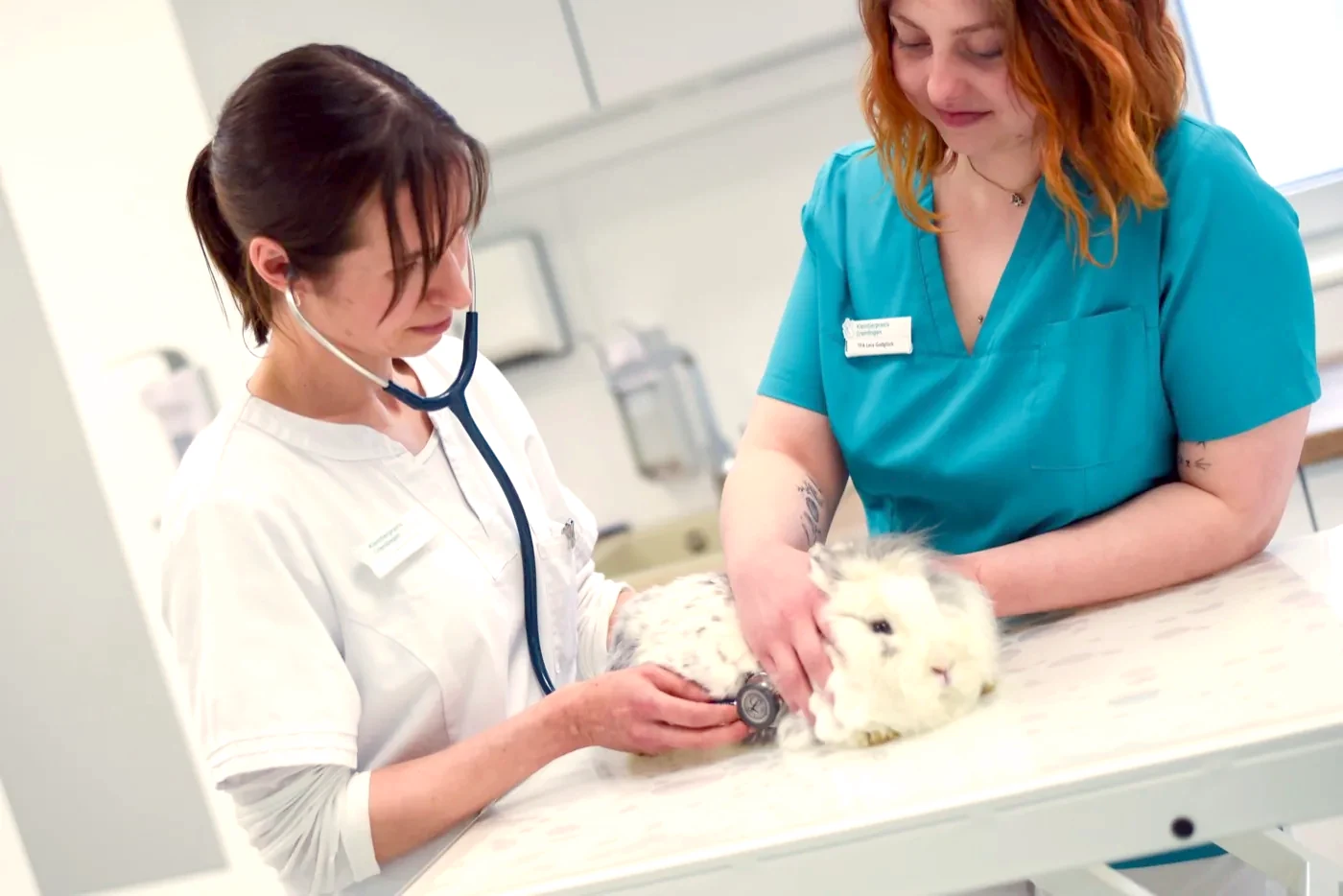
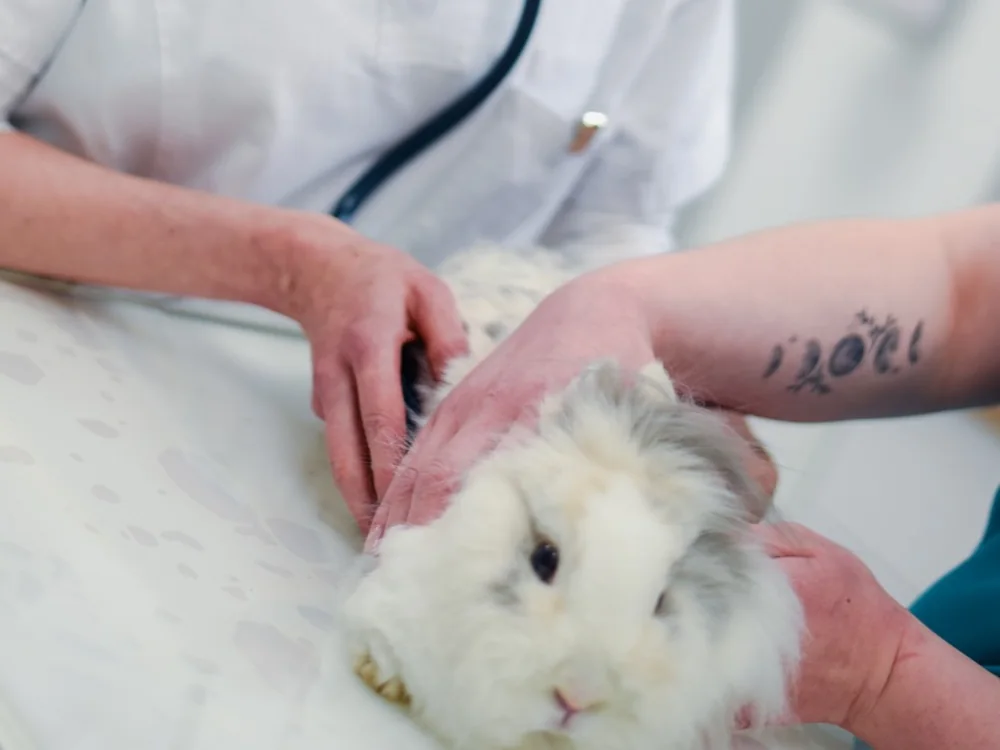
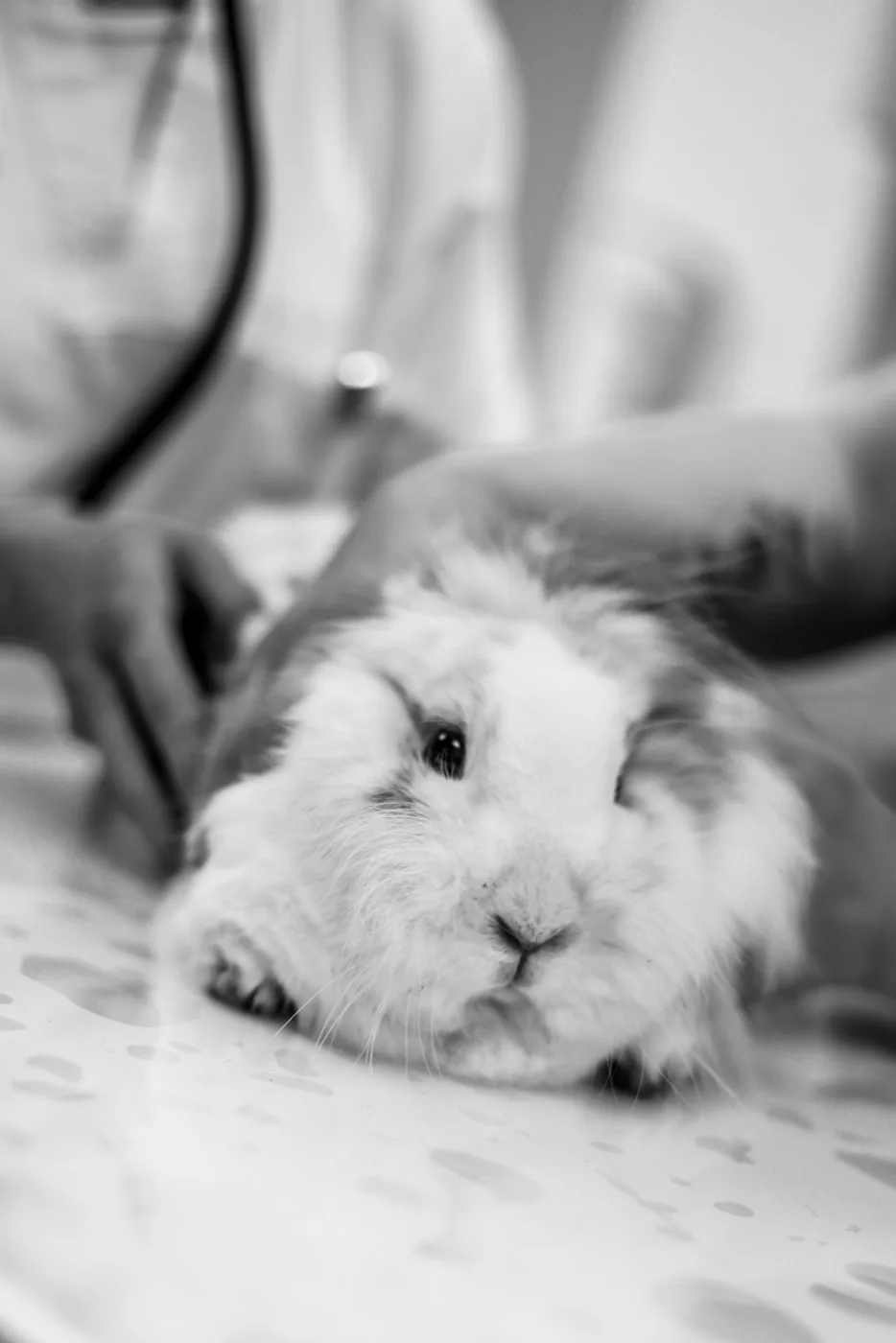
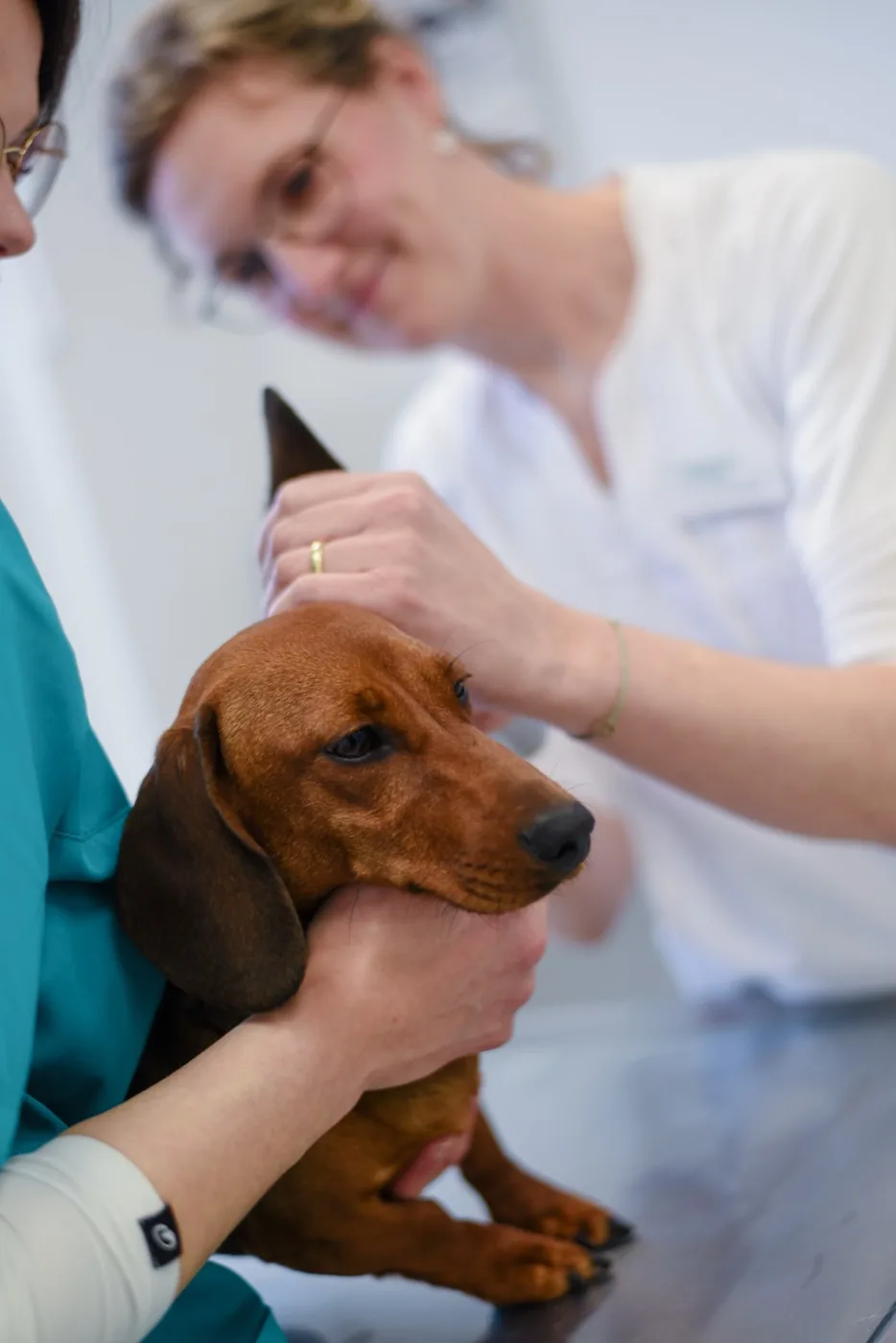
- Gentle examination in a calm environment
- Advice on husbandry, feeding and preventive care
We take the time for a gentle examination and are glad to choose quiet times of day for anxious animals. In this way the unavoidable agitation of a practice visit can be kept as low as possible for your animal.
Signs you should not wait on
Observe your small pet attentively in everyday life. Bring it to us if you notice any of the following signs:
- the animal is eating less or not at all,
- the amount, shape or consistency of the droppings changes,
- it withdraws, seems listless or sits hunched up with its fur ruffled,
- its breathing is conspicuous or the animal has nasal discharge,
- it loses weight or its posture changes.
Such signs should be assessed by a vet promptly, with small pets, it is better too early than too late. This overview does not replace an examination at the practice.
Teeth and digestion in small pets
In rabbits and guinea pigs the teeth grow continuously throughout life. If they are not worn down enough, misalignments and painful sharp edges can develop that make eating difficult. Dental and digestive problems are often linked in small pets, because an animal with toothache eats less. And this can quickly throw the sensitive digestive tract out of balance.
Regular dental check-ups are therefore part of preventive care. If an animal stops eating, this is an emergency sign that should not be left to wait.
Feeding plays an important role: rabbits and guinea pigs need plenty of structure-rich roughage such as hay, which encourages extensive chewing and so wears down the teeth. A one-sided or overly energy-rich diet, by contrast, can encourage dental and digestive problems. We are glad to advise you on what a species-appropriate diet for your small pet can look like.
The practice visit — keeping it low-stress
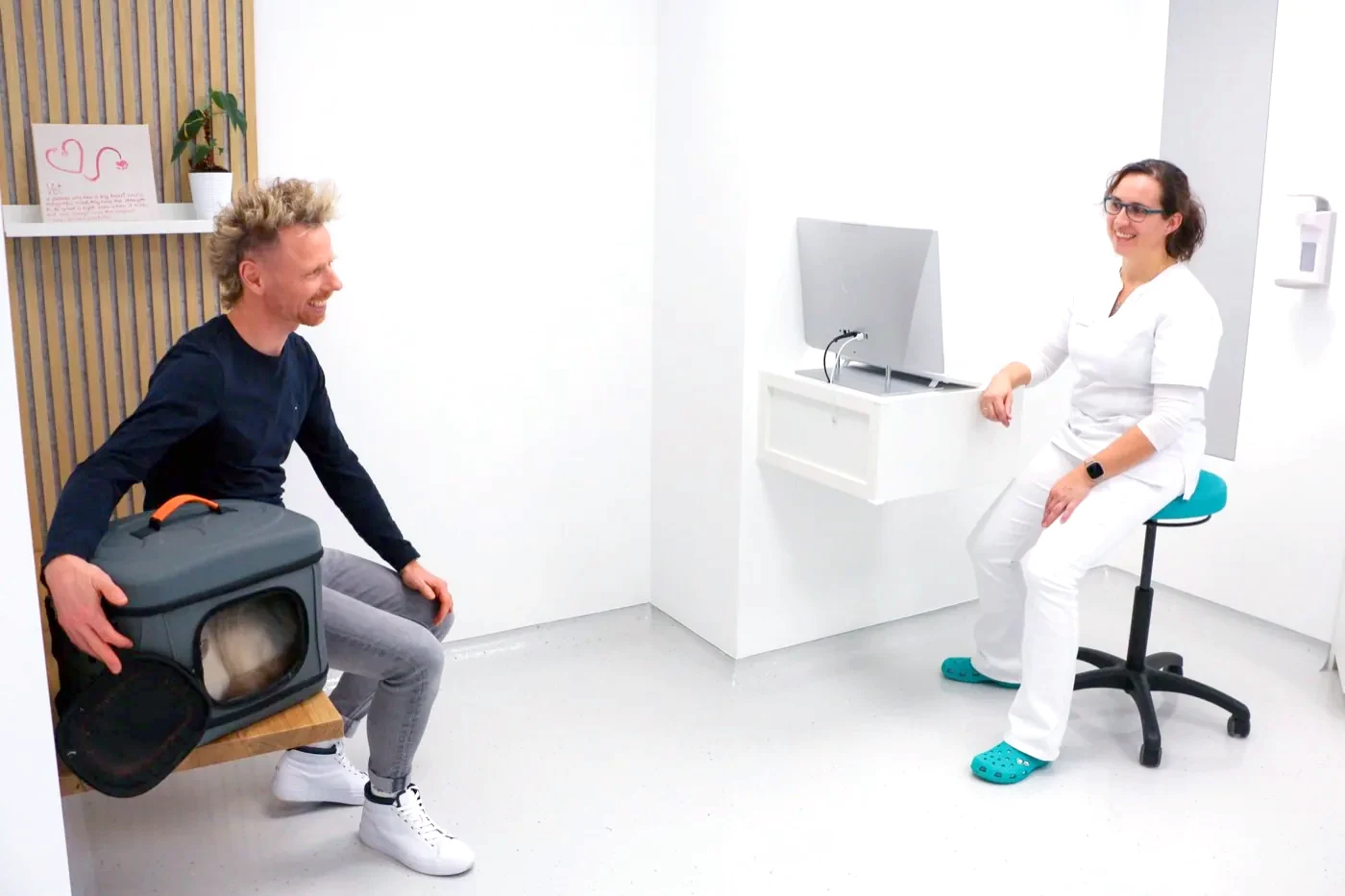
Transport your small pet in a secure, adequately ventilated carrier, ideally with familiar bedding. On the way, avoid noise, heat and hurry. Many small pets are more relaxed in company, if your animal has a companion, you are welcome to bring it along.
It helps if you tell us about your observations: since when has the animal been eating less, what do the droppings look like, has its behaviour changed? This information is an important part of the examination. Because small pets barely show their complaints, your everyday observations are often the decisive clue.
We carry out the examination itself as calmly as possible and in short steps, so that the animal experiences as little stress as possible. During the examination we assess, among other things, weight, general condition, teeth, abdomen and breathing. This builds a picture of the state of health that forms the basis for the next steps.
Preventive care, husbandry and feeding
Many small pet illnesses are linked to husbandry and feeding. A species-appropriate diet with enough roughage, sufficient exercise and suitable accommodation contribute substantially to good health. We are glad to advise you on this, and also on the question of which preventive measures, including possible vaccinations in rabbits, make sense in your situation.
The social situation is part of this too. Many small pets are sociable animals that feel more comfortable in suitable company. Equally important are places to retreat to, occupation and a spot protected from draughts and heat. If you are unsure whether your animal's husbandry meets its needs, talk to us, good husbandry is the best prevention.
Small pet medicine in Cremlingen and the region
Our practice in Cremlingen is easy to reach for pet owners from Braunschweig, Königslutter am Elm, Wolfenbüttel and Wolfsburg. If your rabbit or guinea pig shows signs of illness or you have questions about husbandry, we are glad to arrange an appointment. We take the time for your animal.