When an animal is ill, one thing matters above all: finding out quickly and reliably what is wrong. Good diagnostics are the foundation of every targeted treatment. At our practice in Cremlingen we can carry out many examinations directly on site. This overview explains which diagnostic options we use, when they make sense and how an appointment works.
Why thorough diagnostics matter
Dogs and cats cannot tell us where it hurts. An animal that seems listless, eats less or shows pain at first only gives a non-specific picture. It is diagnostics that turn a suspicion into a reliable answer. They show whether something harmless or something requiring treatment lies behind a symptom, and they help to start a treatment in a targeted way rather than on suspicion.
The fact that we can carry out many examinations in our own practice saves you journeys and waiting time, and saves us valuable time for treatment. With acute symptoms in particular, this can make a difference.
What diagnostics include
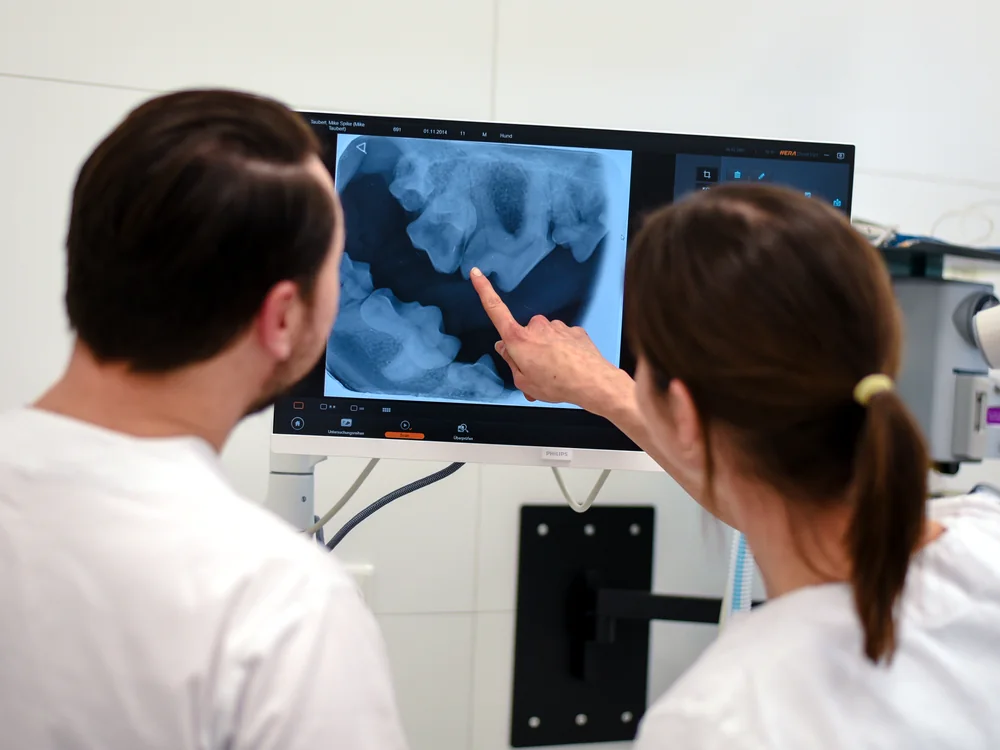
- Digital X-ray with low radiation exposure
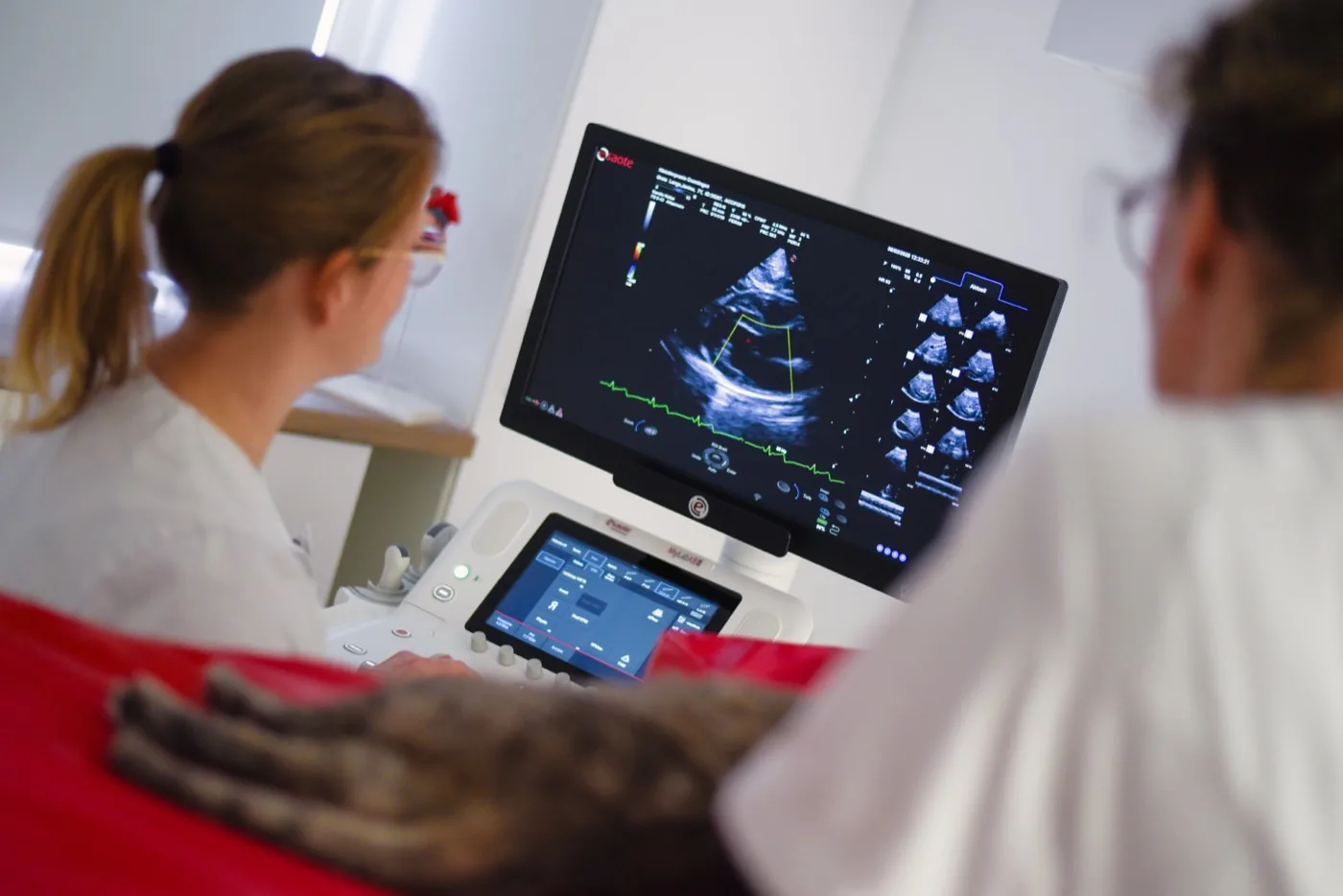
- Ultrasound and cardiac ultrasound by our sonography specialist
- In-house laboratory for blood counts, organ values and rapid tests
- Endoscopy and cytology for specific questions
- Discussion of findings often still at the same appointment
Which examination makes sense in an individual case we decide after the physical examination and in conversation with you. Often several procedures complement one another, a blood count answers different questions than an X-ray or an ultrasound.
X-ray and ultrasound
Digital X-ray delivers precise images of bones, the chest and the abdomen at low radiation exposure. It helps, for example, in clarifying lameness, breathing difficulties or a suspected swallowed foreign body.
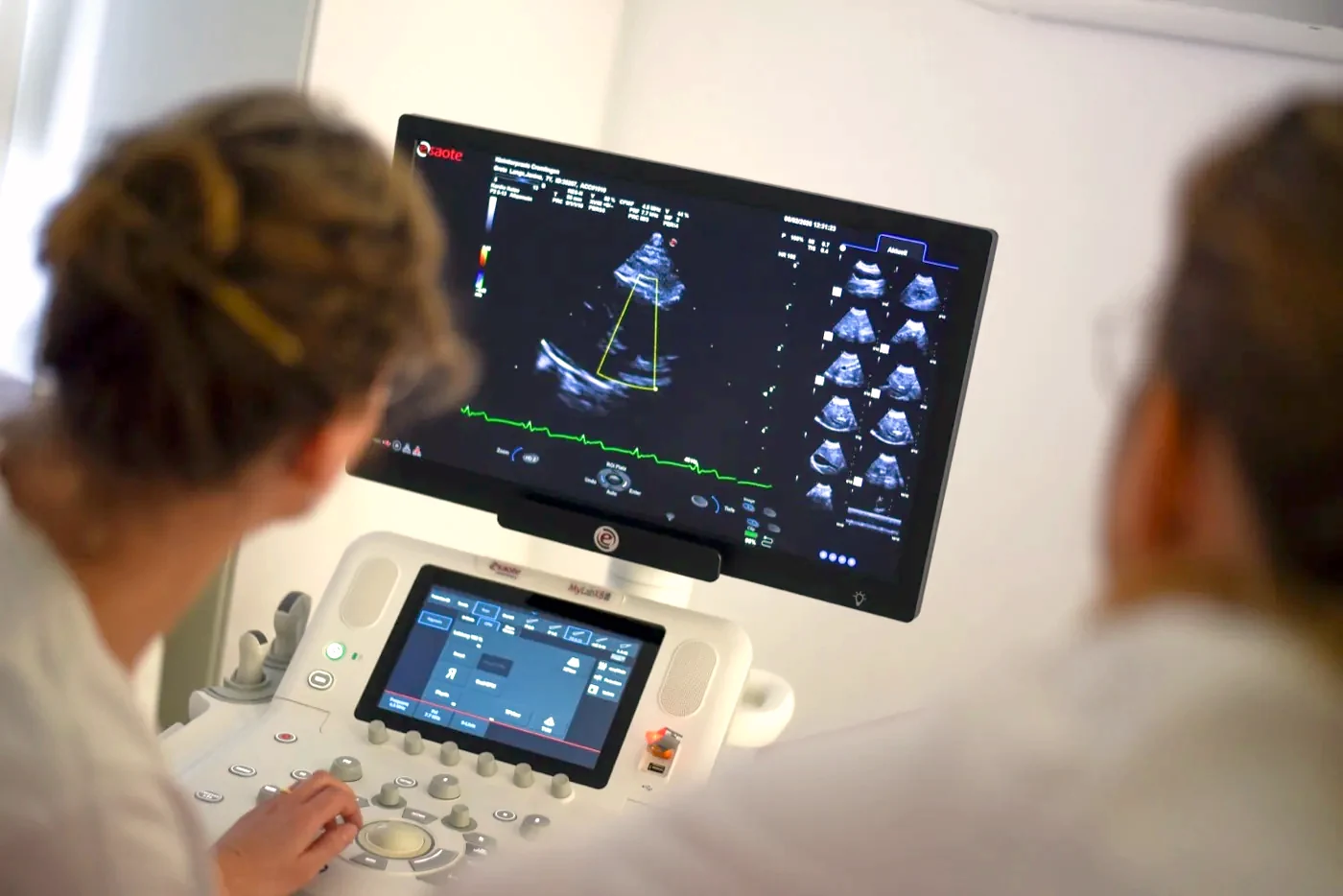
Ultrasound enables a gentle, pain-free view of the organs, from the abdominal organs to the heart. Cardiac ultrasound and further ultrasound examinations are carried out by our sonography specialist. Both procedures complement one another: while X-ray shows structures in overview, ultrasound allows tissue and movement processes to be assessed more precisely.
The in-house laboratory
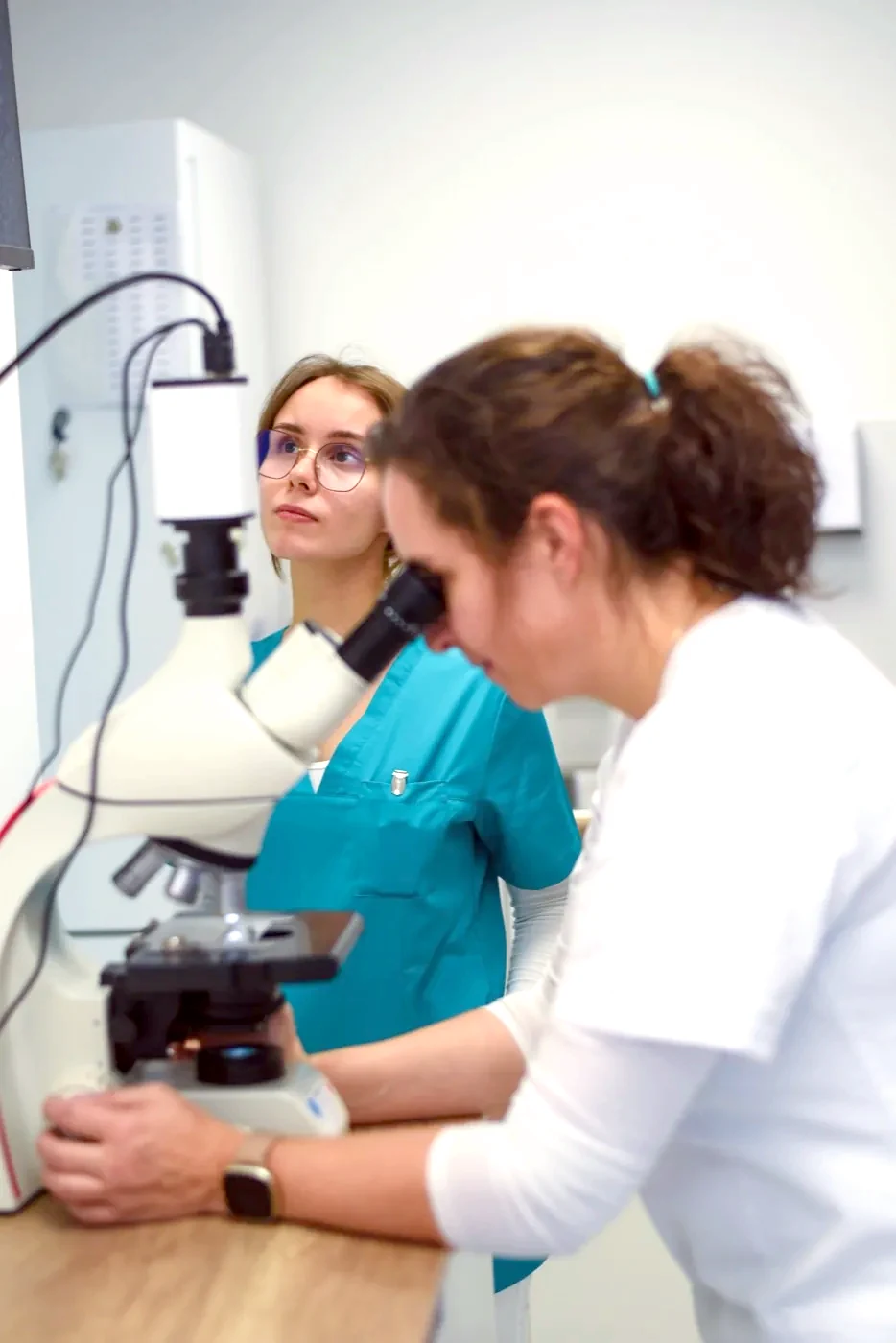
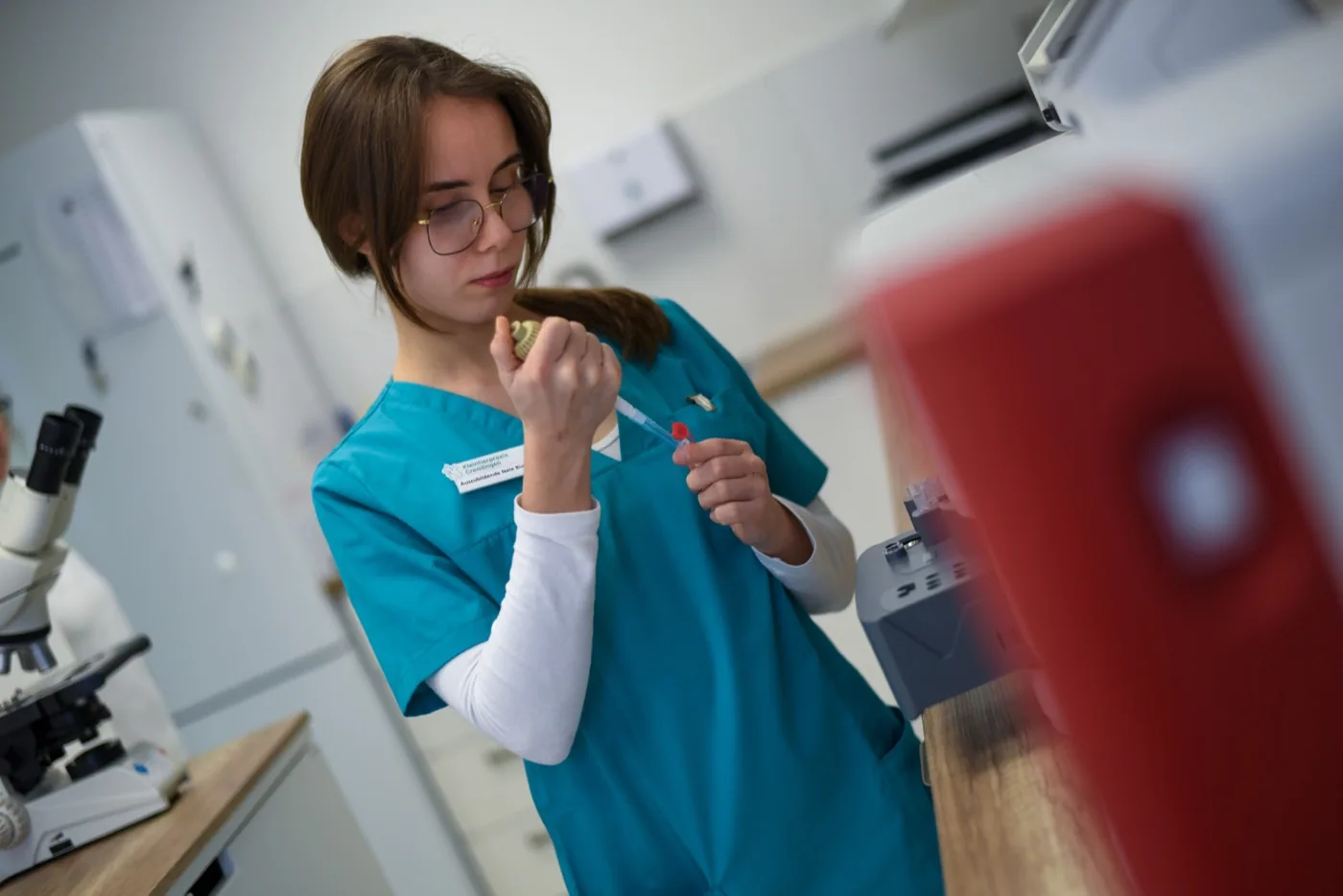
In our laboratory we evaluate blood counts, organ parameters and rapid tests directly on site. This allows many questions to be answered already during the appointment, for example about the function of the kidneys and liver, about inflammation values or about blood sugar. Faecal and urine examinations are also part of this.
For special analyses we work together with a specialist laboratory. These findings accordingly take a little longer, but they complement on-site diagnostics where particular questions make this necessary.
Faecal and urine examinations also provide valuable clues. A faecal sample can, for example, reveal parasites, and a urine sample provides information about the kidneys and urinary tract. If you are to bring a sample, we explain in advance how best to collect and store it. This often allows the appointment to be arranged more efficiently and your pet has to stay at the practice for less time.
When a blood test is particularly worthwhile: from the second half of life (senior check), before a planned anaesthetic, with unclear symptoms such as increased drinking, weight loss or tiredness, and to monitor known conditions. This often lets us detect silent organ changes before they cause discomfort.
In the second half of life?
The age calculator shows in seconds where your dog or cat stands in human years, from the senior years a blood test is particularly worthwhile.
Endoscopy and further procedures
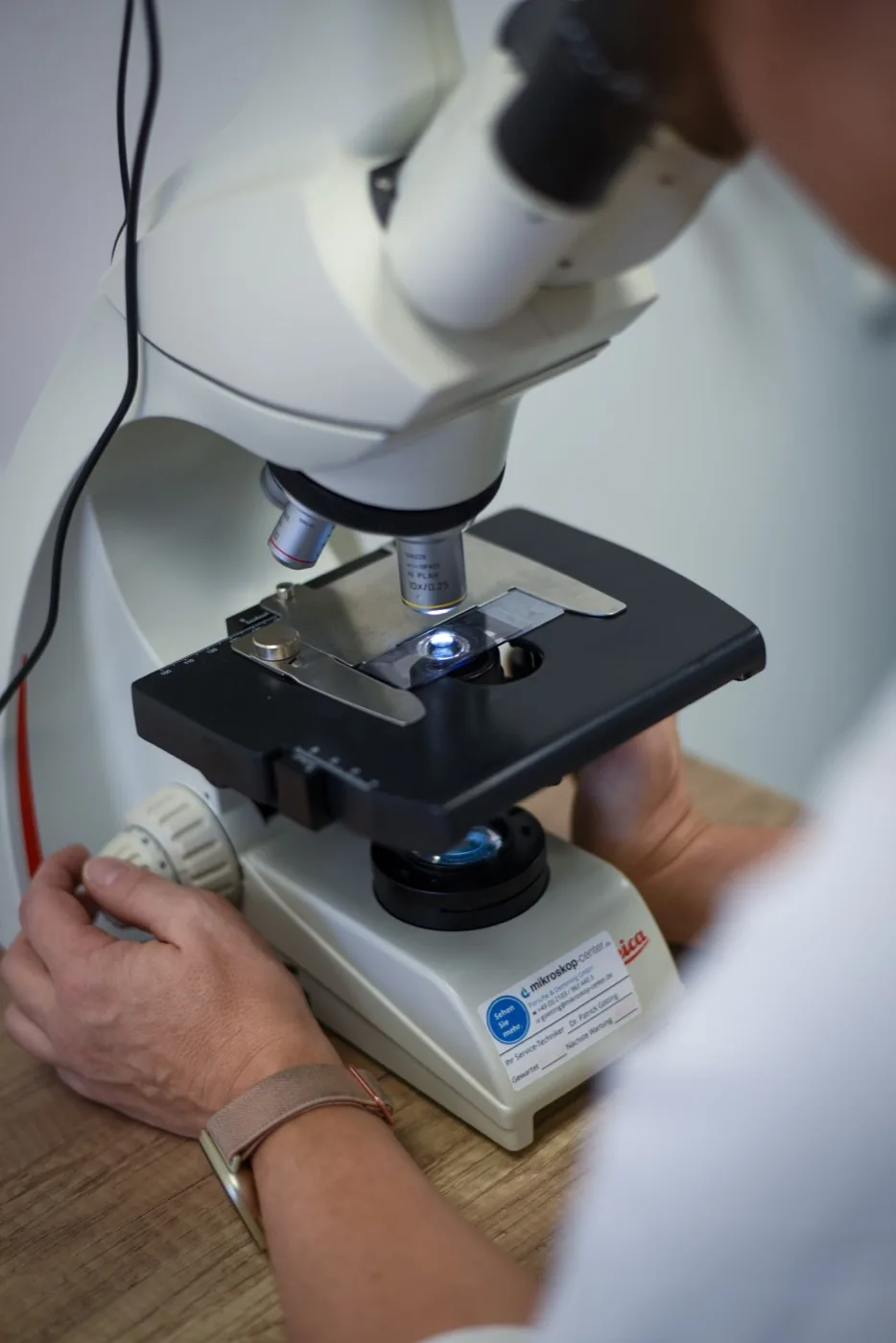
For certain questions we use endoscopy and cytology. With endoscopy, hollow organs can be viewed from the inside, for example to track down foreign bodies. Cytology, the examination of cells under the microscope, helps in assessing masses or inflammation. Whether such a procedure makes sense depends on the individual case.
When an examination makes sense
Diagnostics are not only helpful with acute symptoms. As part of preventive care, for example at the senior check, or before a planned anaesthetic, they can also provide important information. Bring your pet in if you notice changes, for example in eating behaviour, weight, activity or breathing. Which examination is then indicated we clarify together. This overview does not replace a veterinary examination.
The appointment and discussing the findings
For many examinations no special preparation is needed. If blood is to be taken, it can make sense for your pet to fast for a few hours beforehand. We clarify this when arranging the appointment. For X-ray or ultrasound it is important that your pet lies as still as possible; where needed, we discuss light sedation.
Many results we can discuss with you at the same appointment. Via the MeineTiere app you can conveniently view findings on your smartphone; on request we also send results by e-mail.
It is important to us that you understand a finding. Numbers and images alone are of little help if it remains unclear what they mean for your pet. That is why we take time to put the results into context, explain possible next steps and answer your questions. Sometimes a finding is clear, sometimes further examinations or a follow-up check are needed. We also discuss this openly with you. A reliable diagnosis is the foundation for your pet receiving the right treatment. This page, however, does not replace a veterinary examination.
Diagnostics in Cremlingen and the region
Our practice in Cremlingen is easily reached by pet owners from Braunschweig, Königslutter am Elm, Wolfenbüttel and Wolfsburg. If your pet shows symptoms or a finding needs to be clarified, you are welcome to arrange an appointment. We will advise you personally.