
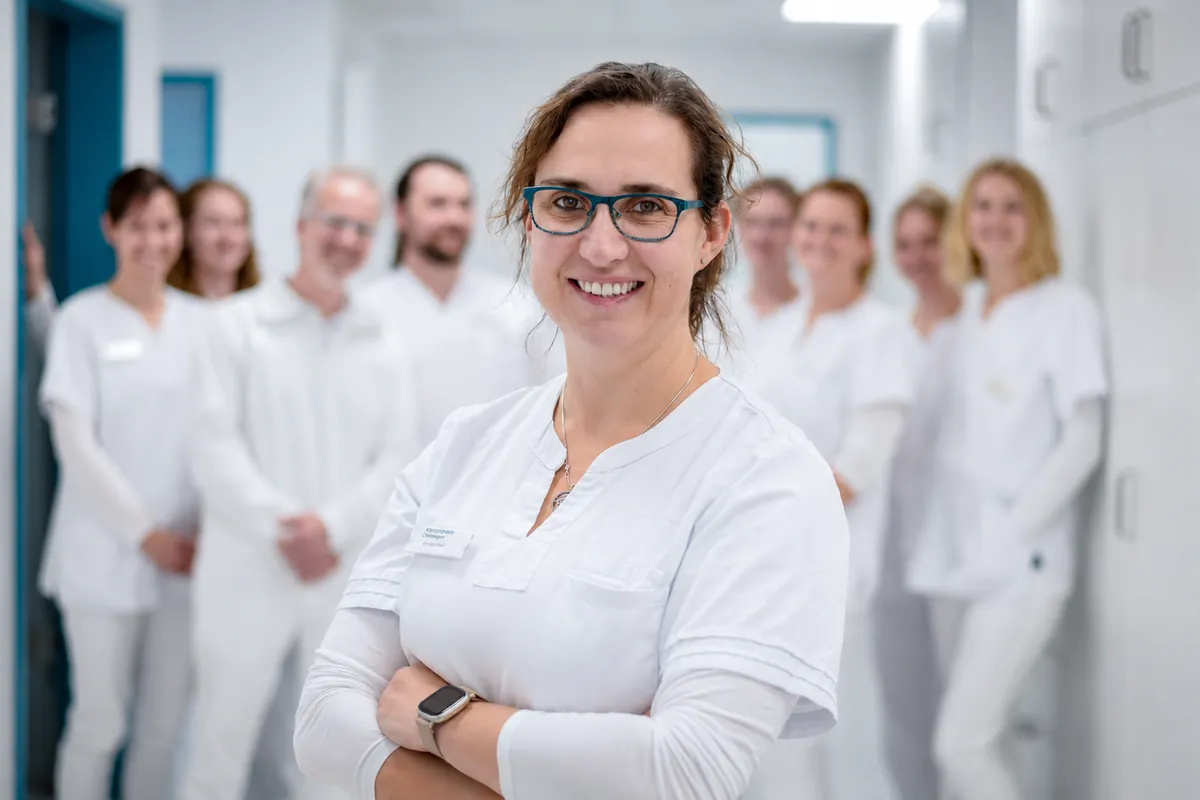
Dr Katja Häusler
Practice owner · Ophthalmology, dermatology & gynaecology
Eyes are delicately built and react sensitively. A redness that looks harmless can be serious, and some eye problems worsen within hours, so every hour counts. We look closely and treat in a targeted way.
The eye is small, delicately built and reacts sensitively to disturbances. A redness that at first looks harmless can be the expression of a condition that needs treatment, and some eye problems worsen within hours. The sooner we know the cause, the better it can be treated.
Many eye problems can be treated well if they are recognised in time. Owner Dr Katja Häusler has ophthalmology as one of her areas of focus.
Animals do not always show eye complaints clearly. Do bring your pet to us if you notice one of these signs in the eye.
Increased tearing or sticky eyelids point to an irritation or inflammation.
Common early signA reddened conjunctiva or a red eyeball should be checked.
VisibleFrequent blinking, squinting or sensitivity to light point to pain.
A sign of painIf your pet rubs the eye or scrapes it against objects, something is bothering it.
In everyday lifeA visible clouding or a changed eye colour belongs in veterinary hands for assessment.
Look closelySwollen eyelids or a prolapsed third eyelid are a clear reason to check.
Have it checkedA suddenly bulging, strongly reddened, clouded or visibly painful eye should be presented quickly. Here every hour can count. Even if your pet can no longer open the eye at all, you should not wait.
Not every changed eye is an emergency. But some signs allow no delay. This overview helps you make the assessment. If in doubt: better make a quick call.
Mild, unchanging changes without pain. Bring your pet in if they persist longer or increase.
These signs can endanger eyesight. Please call us straight away before you set off.
It is tempting to quickly treat a red eye yourself. But some eye drops, particularly preparations intended for humans, can cause serious harm in certain conditions. With an injured cornea, for example, the wrong product can delay healing or worsen the damage.
Only an examination shows what lies behind a red or watery eye, and which treatment really fits. If in doubt, a quick phone call helps more than reaching for the home medicine cabinet.
An eye examination is well tolerated by most animals. Special preparation is usually not necessary.
You describe when the change began and whether your pet is rubbing or showing pain.
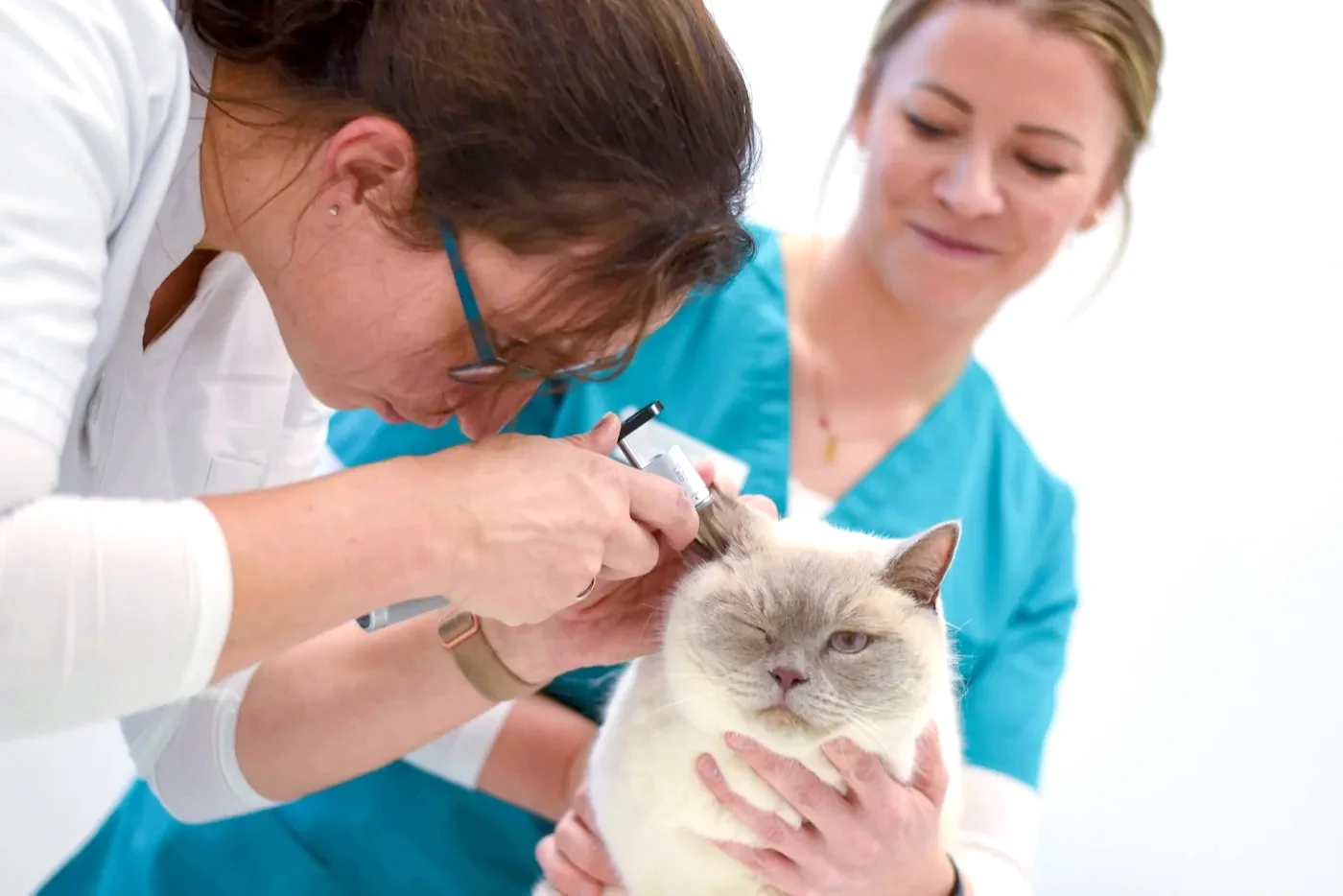
We assess the eyelids, conjunctiva, cornea and the deeper structures of the eye.
Depending on the question, we check tear production or stain corneal injuries to make them visible.
We discuss the findings with you in plain language and decide on the treatment together.
The treatment depends on the cause. With conjunctivitis, eye drops or ointments are often used; with other conditions, further measures may be needed. What matters is that the prescribed treatment is carried out consistently, even when the eye already seems to be improving.
Do you have a question that is not answered here? Do give us a call, with an acute eye problem, best straight away.
Not every red eye is an emergency, but some eye conditions worsen within hours. Because harmless and serious causes can hardly be told apart from the outside, a changed eye should be looked at promptly. If the eye is suddenly bulging, strongly clouded or visibly painful, please call us in advance.
Watch for increased tearing or sticky eyes, redness, squinting, frequent blinking or sensitivity to light, rubbing with the paw, a visible clouding as well as swelling of the eyelids. Animals often show eye pain only briefly, if you look at the eyes regularly, you will notice changes sooner.
Please do not. Some eye drops, including preparations intended for humans, can cause serious harm in certain conditions, for example with an injured cornea. Only use eye drops on veterinary recommendation. If in doubt, a quick phone call helps.
The examination is gentle and well tolerated by most animals. We assess the eyelids, conjunctiva, cornea and the deeper structures and, depending on the question, use targeted tests, for example to measure tear production or to stain corneal injuries. Special preparation is usually not necessary.
Keep your pet calm and prevent it from rubbing or scratching the eye. Do not treat the eye yourself and do not use any drops whose effect you do not know. Call us in advance, by phone we will tell you what matters on the way to us.
Yes. Short-nosed breeds with large, protruding eyes in particular are more prone to irritation and injury. Eyelid malformations are also more common in certain breeds. For these animals it is worth keeping a particularly attentive eye on the eyes.
Many eye problems can be treated well if they are recognised in time. What is decisive is carrying out the prescribed treatment consistently, even when the eye already seems to be improving. The earlier a condition is recognised, the better the outlook.
If your pet's eye looks red, clouded or painful: we take a calm look at it and advise you personally. With an acute eye problem, please call in advance.
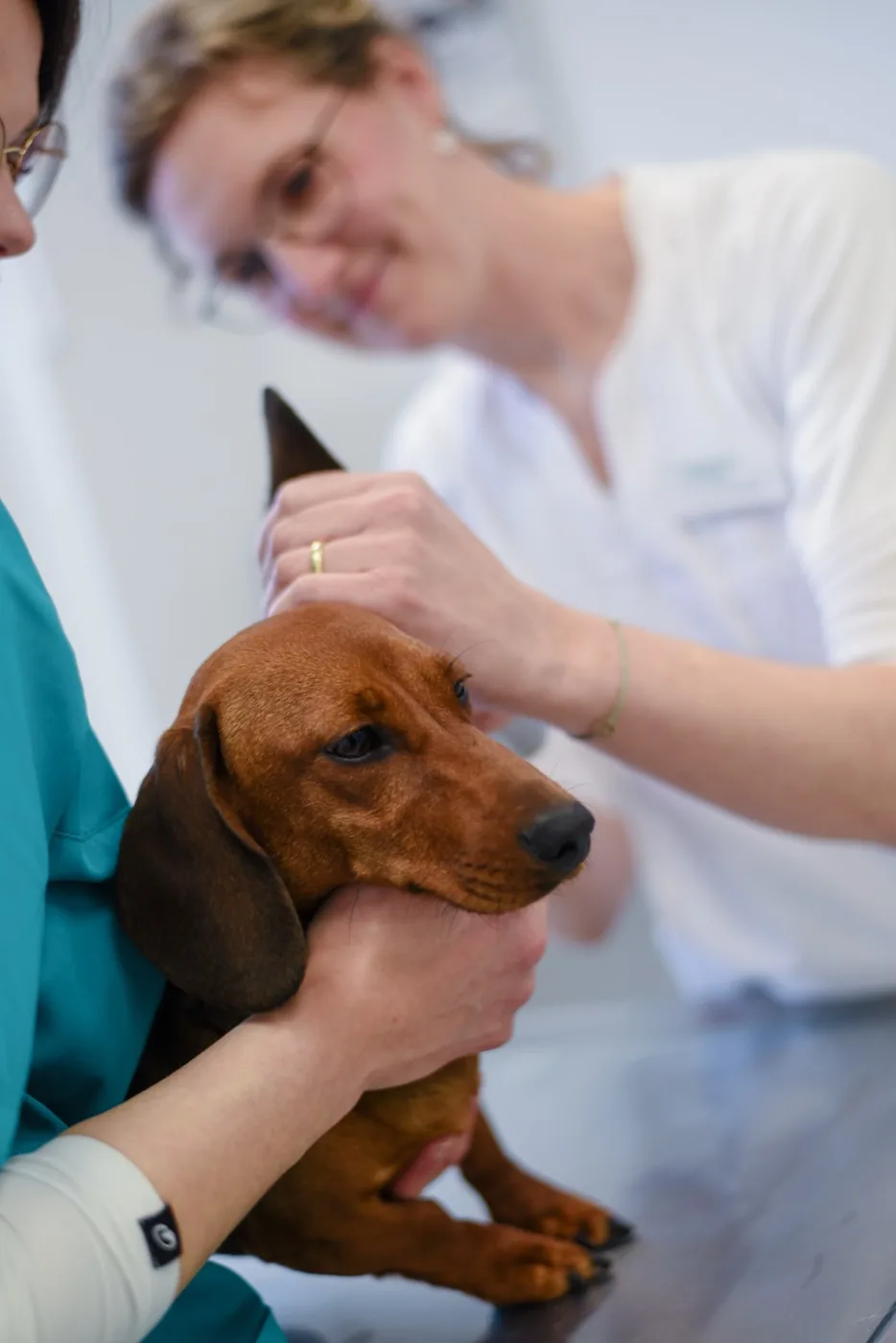
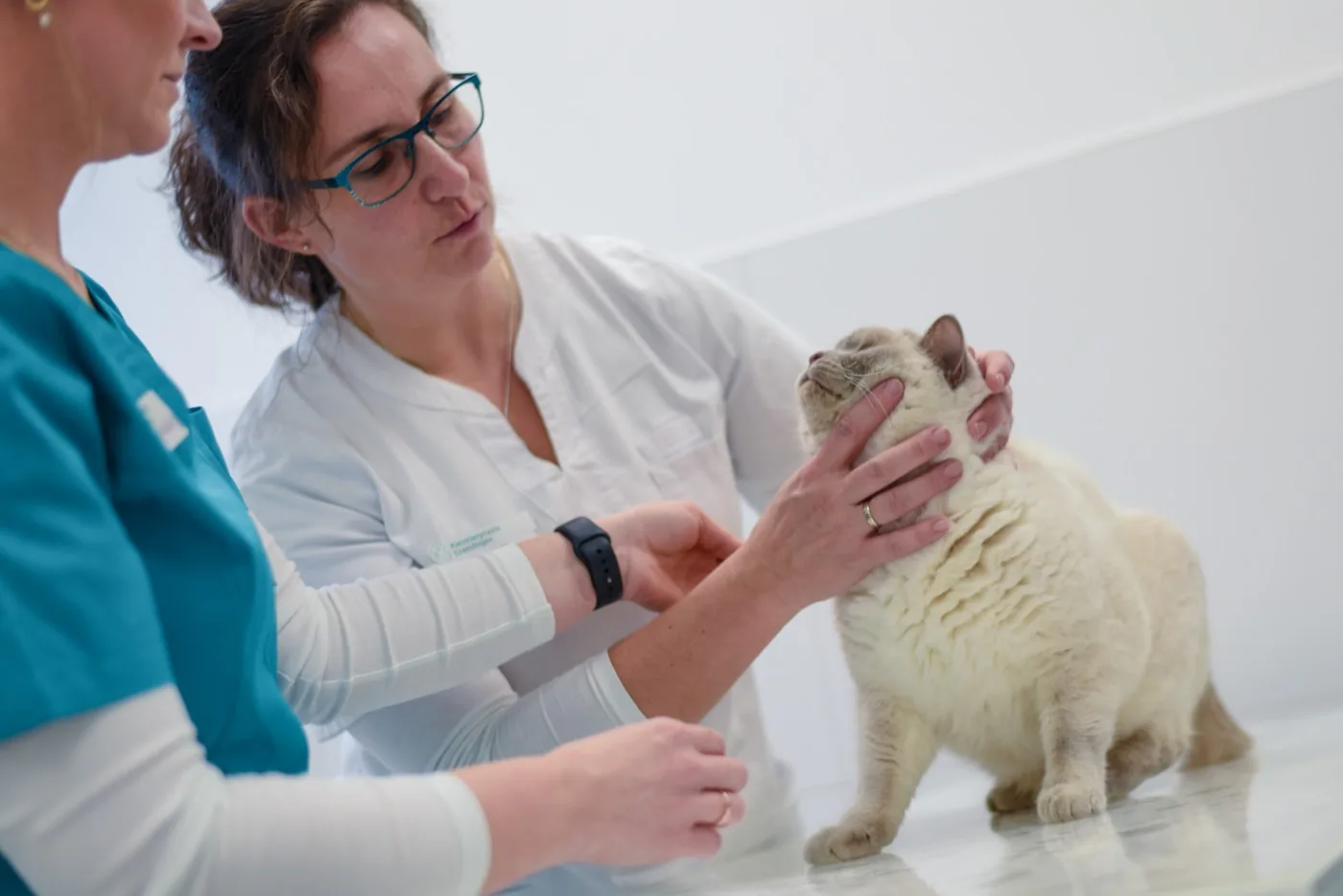
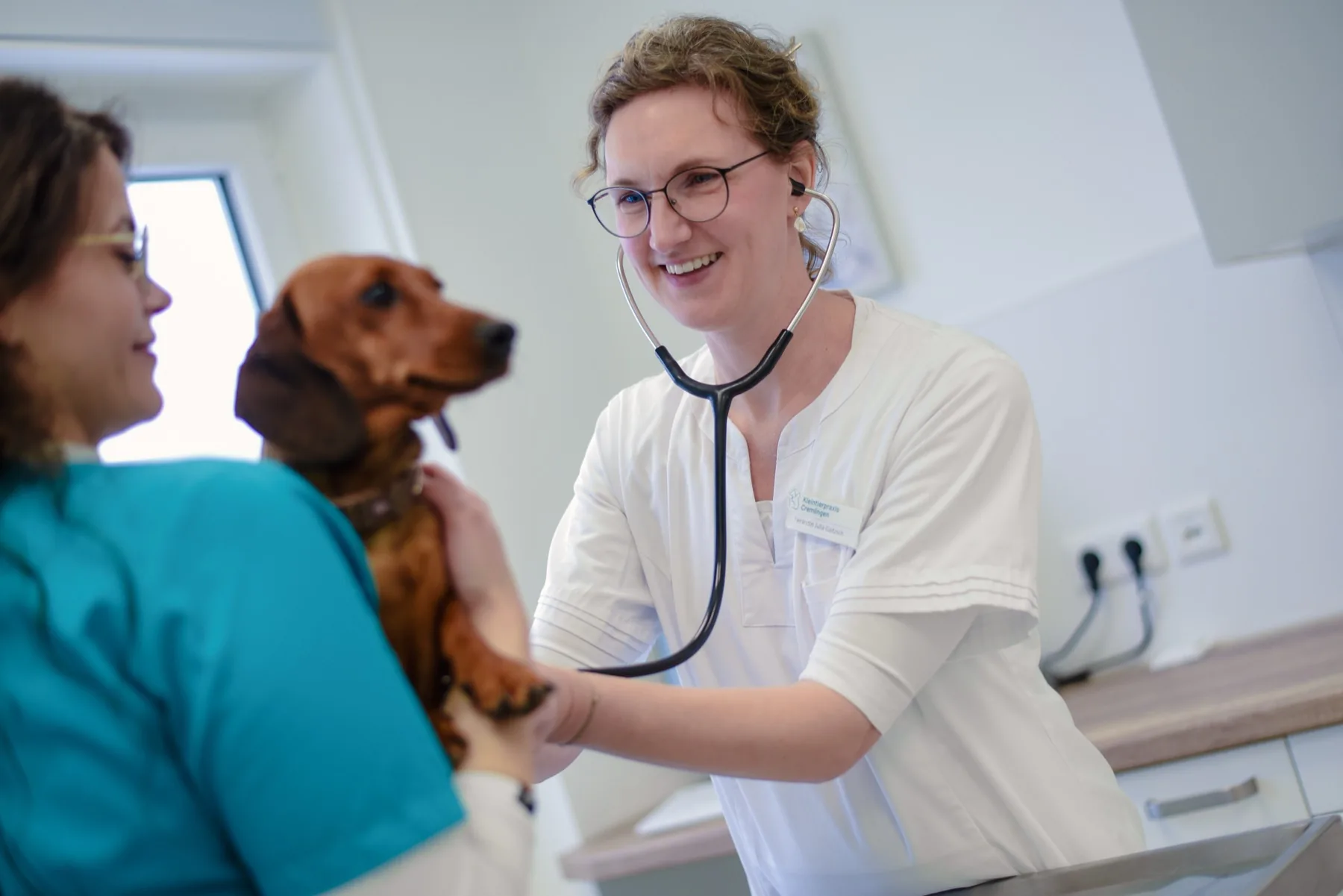
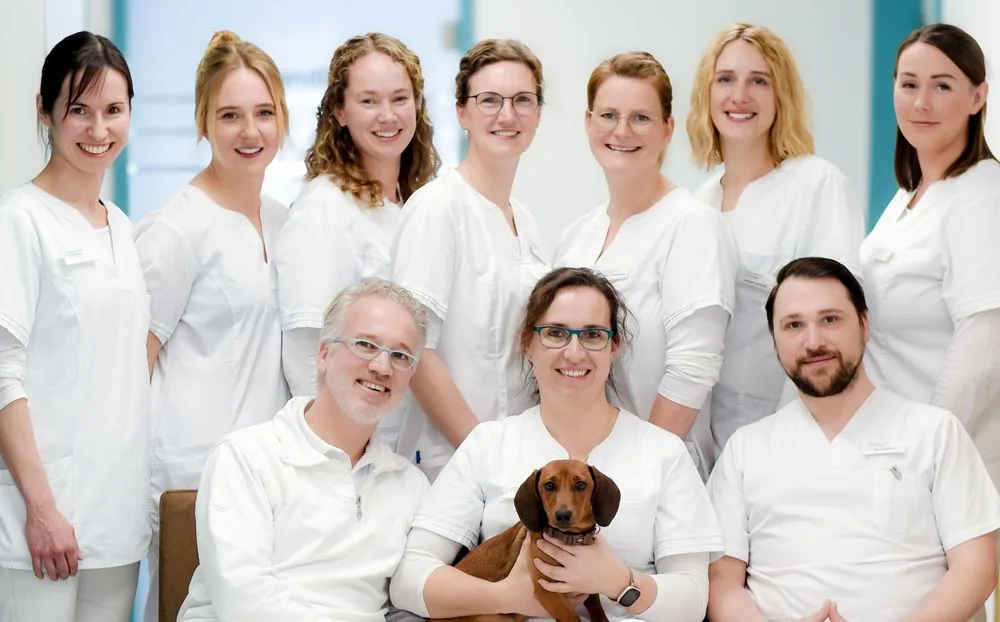
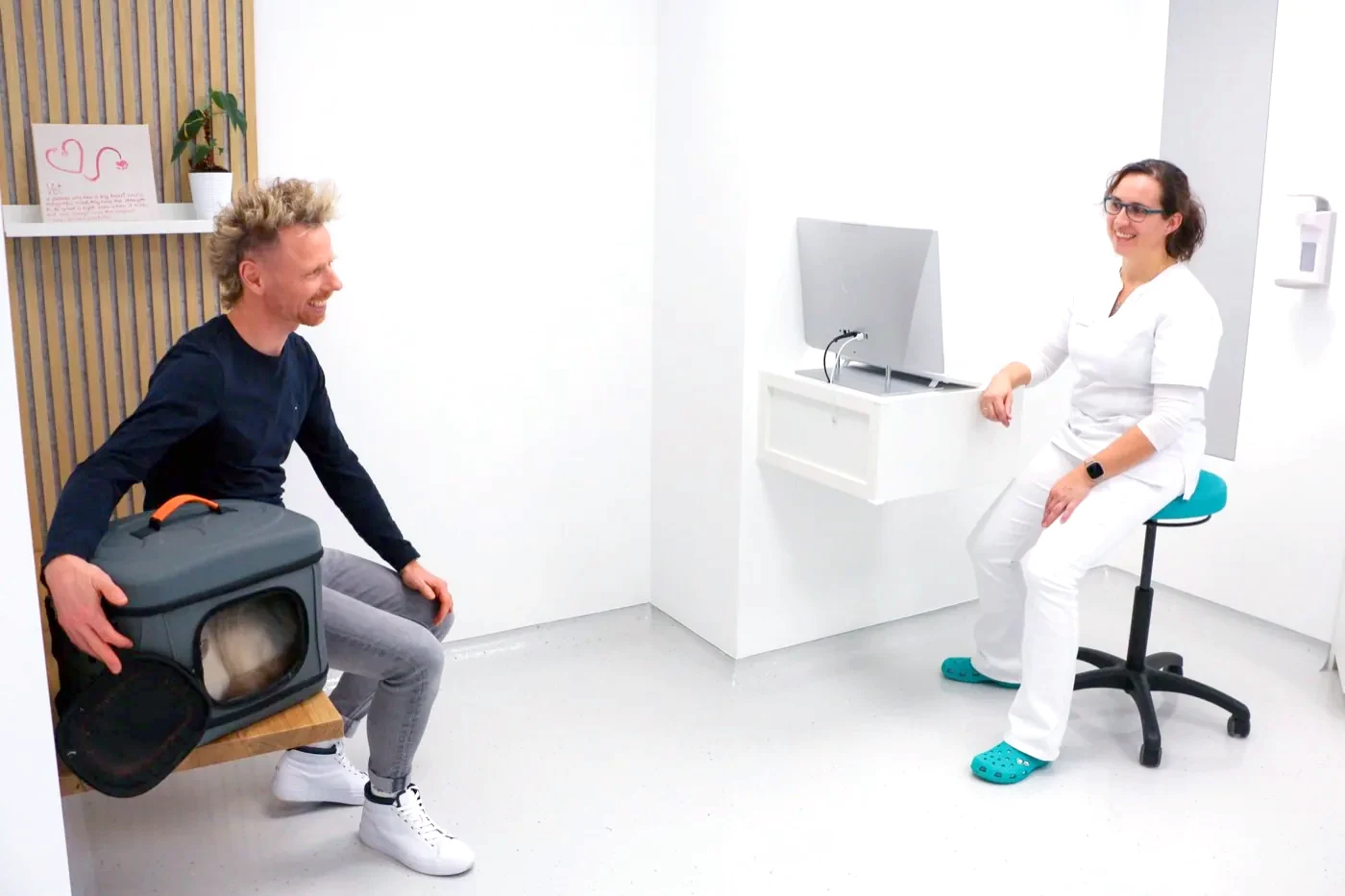
Bright rooms, modern technology and a well-coordinated team. That is what the place where your pet is treated looks like.
Book an appointment online or give us a call, for acute eye complaints if possible on the same day.
A selection of your contact persons for this area. Naturally, our entire team is there for you.
Practice owner · Ophthalmology, dermatology & gynaecology