
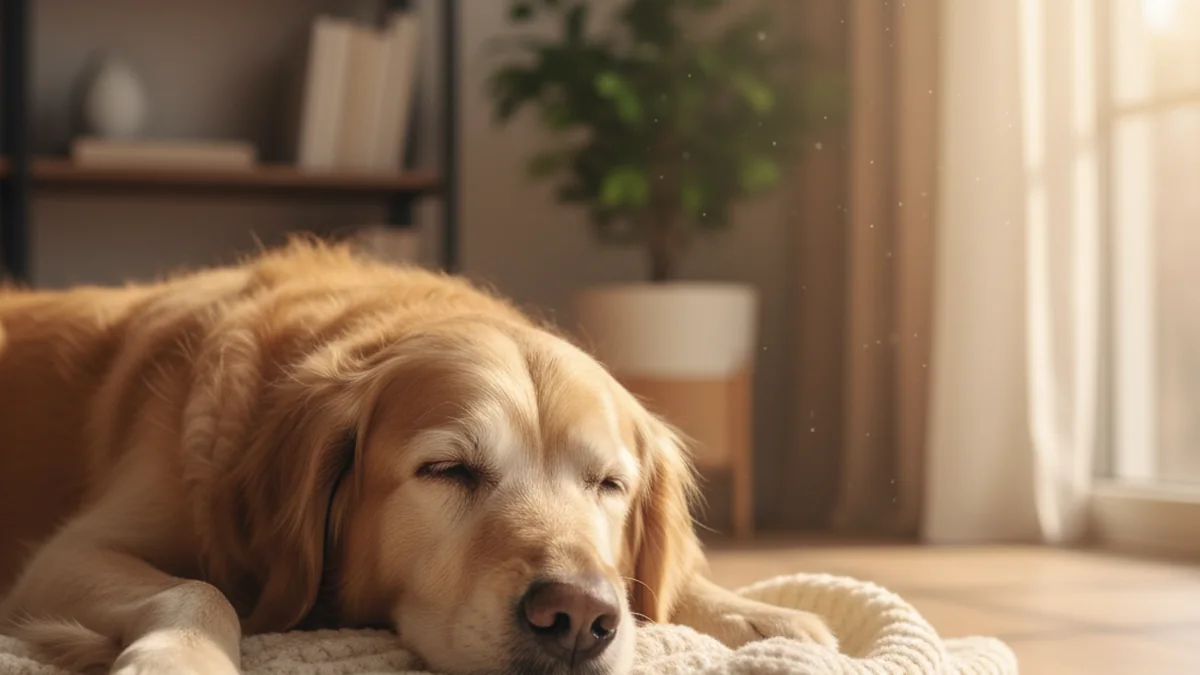
When is the time right?
There is hardly a question that weighs on pet owners as heavily as this one. There is no single, clearly right moment, and the feeling of acting too early or too late accompanies many people. Please be gentle with yourself: the very fact that you are asking this question shows how deeply you love your pet and how much you want to spare it unnecessary suffering.
It helps not to wait for a single moment, but to look at the bigger picture: do the good days still outweigh the bad, or are the difficult days becoming more frequent? An honest assessment, made calmly, gladly together with us, can help you reach a decision that is in your pet's best interest.
Assessing quality of life
To assess a pet's quality of life, it helps to observe everyday life attentively. These questions can offer you some orientation:
- Does your pet still eat and drink with appetite and without difficulty?
- Can it move, get up and rest without significant pain?
- Does it still take an interest, in you, in familiar routines, in its surroundings?
- Are there still moments that noticeably do it good and bring it joy?
- Can it keep its dignity, for instance with grooming and toileting?
No one knows your pet as well as you do. If you are unsure, we are gladly here for you: in a quiet conversation we look together at how your pet is really doing, and discuss the options available. You do not have to carry this question alone.
How a euthanasia takes place
A euthanasia should be a calm and pain-free transition for your pet, and that is what we strive for. We take our time and arrange the process as gently as possible.
As a rule, your pet first receives a sedative. This allows it to fall asleep relaxed, free of fear and pain, often on a familiar blanket and close to you. Only once your pet is calm and deeply asleep does the second step follow, gently and painlessly allowing the heart to come to rest. For your pet, this moment feels like a peaceful drifting off into sleep.
We explain every step to you beforehand, so that you know what is happening and nothing takes you by surprise. There is no pressure and no rush.
Being there at the practice
You decide how much closeness is right for you and your pet. Many people wish to stay with their pet in this moment, to stroke it and to be there for it in a familiar way. This is possible at any time and is often a comfort for both. If that is too hard for you, that is also perfectly all right; no one will judge you for it.
We make every effort to provide a protected setting: a quiet time, a sheltered room and as much time as you need. Even after the farewell you may spend a moment alone with your pet, to say goodbye in peace. Please feel free to speak to us in advance if you have any particular wishes. We will try to honour them.
What is possible after the farewell
For the time after the farewell, too, there are options that can suit how you feel. Some people choose a burial, others a cremation, as an individual or communal cremation, with the ashes returned in an urn if desired.
There is no right or wrong decision here. All that matters is that the path you choose feels right for you and helps you to say goodbye. We take the time to explain the options to you calmly and to answer your questions, so that you can make a decision you feel at peace with.
Burial & cremation — partners in the region
If you choose an individual burial or cremation, you don't have to organise it on your own. In the region, specialised pet undertakers accompany you with empathy, from collection through individual or communal cremation to the return of the ashes in an urn. We are glad to suggest contacts with whom you can take this path calmly:
These are independent, external service providers. The choice is entirely yours. We link to them for orientation and accept no liability for their content or services.
Coping with grief
The grief of losing a pet is real and deep. It was a trusted companion, a member of the family for many years. Allow yourself to feel this grief, at your own pace. There is no fixed timetable and no wrong way to grieve.
- Give your feelings room. Sadness, emptiness and sometimes also relief may exist side by side.
- Talk to people who understand your bond with your pet.
- A small keepsake, a photo, a paw print or a familiar spot can help with saying goodbye.
- If children are grieving too, an honest, age-appropriate and loving explanation helps.
If grief weighs very heavily or lasts a long time, grief counselling or a pastoral conversation can be valuable support. Seeking help is a sign of care, for yourself.