Why cats show so late that something is wrong
Cats are masters at hiding pain and weakness, a legacy from a time when standing out was dangerous in the wild. For you as an owner this means: an illness is often not visible in your cat for a long time. Older animals in particular gradually develop problems with the kidneys, thyroid, teeth or joints.
That is why the regular preventive appointment is so valuable: if a change is detected early, it can usually be treated more gently and calmly. A cat-friendly visit begins with making this appointment as stress-free as possible for your cat.
What makes a visit cat-friendly
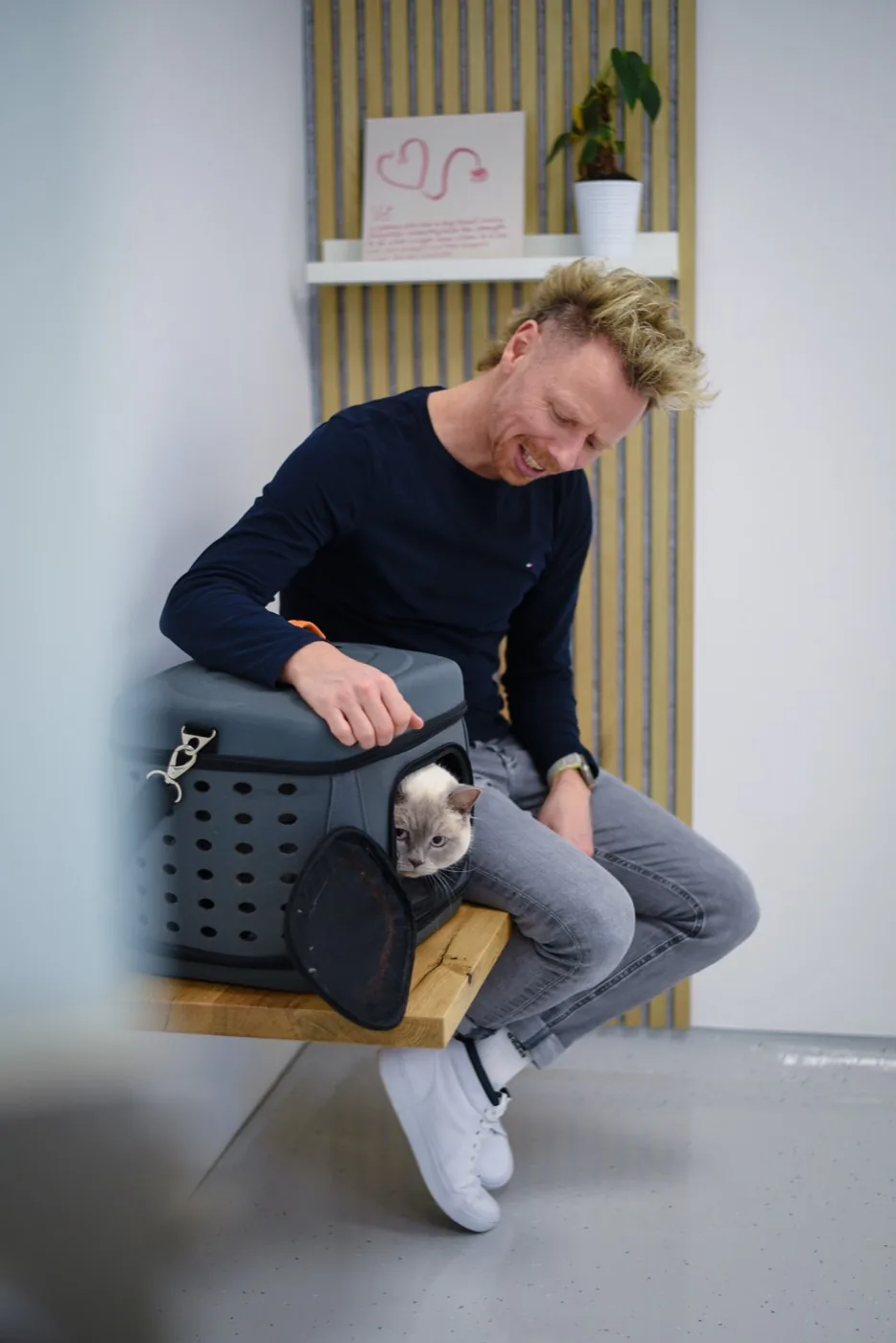
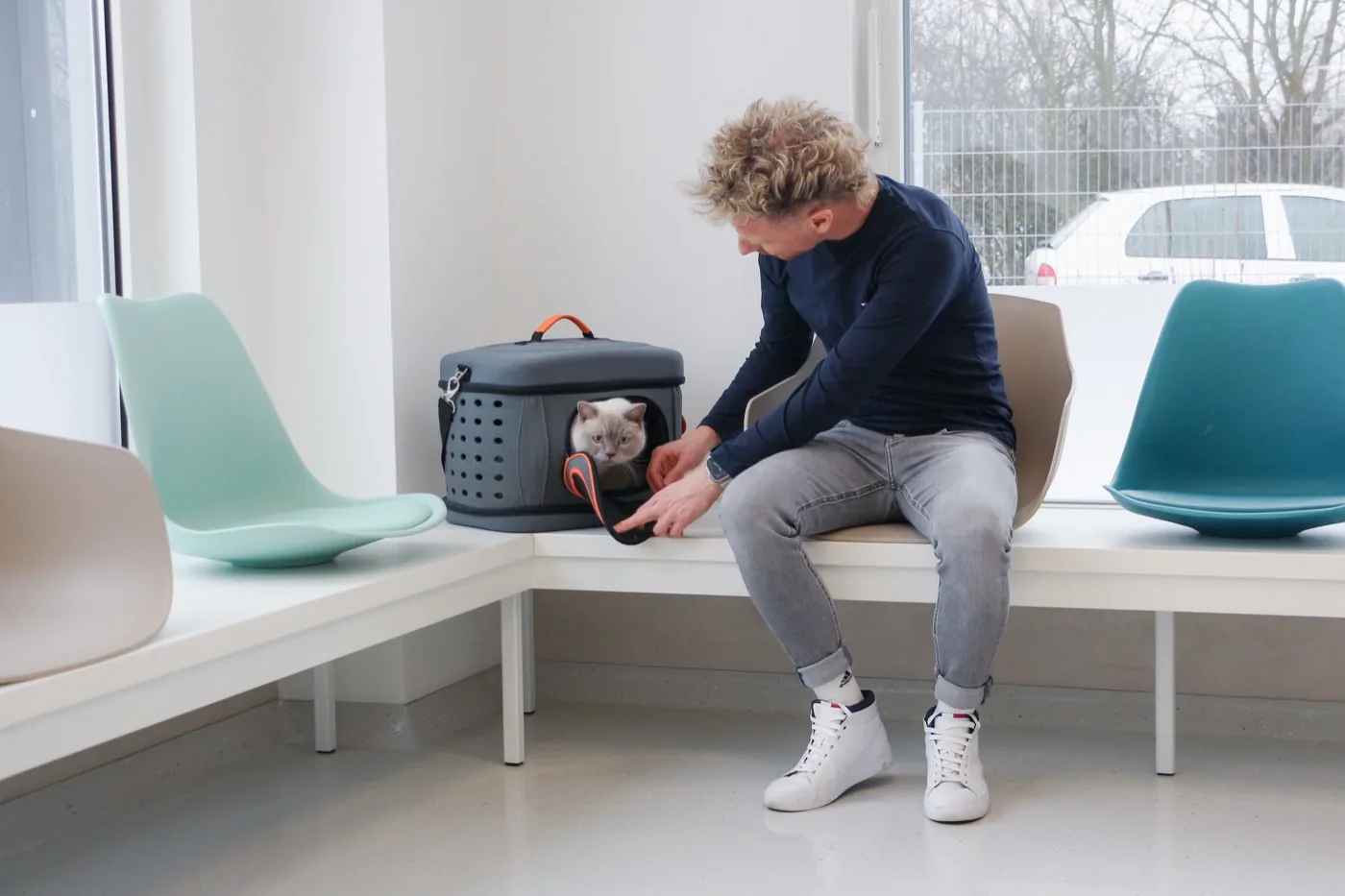
- A separate waiting area for cats: kept apart from the dog area, with raised surfaces so the carrier does not stand on the floor among unfamiliar animals.
- Short waiting times thanks to appointment-based consultations: the less waiting time, the less tension, in the waiting area too.
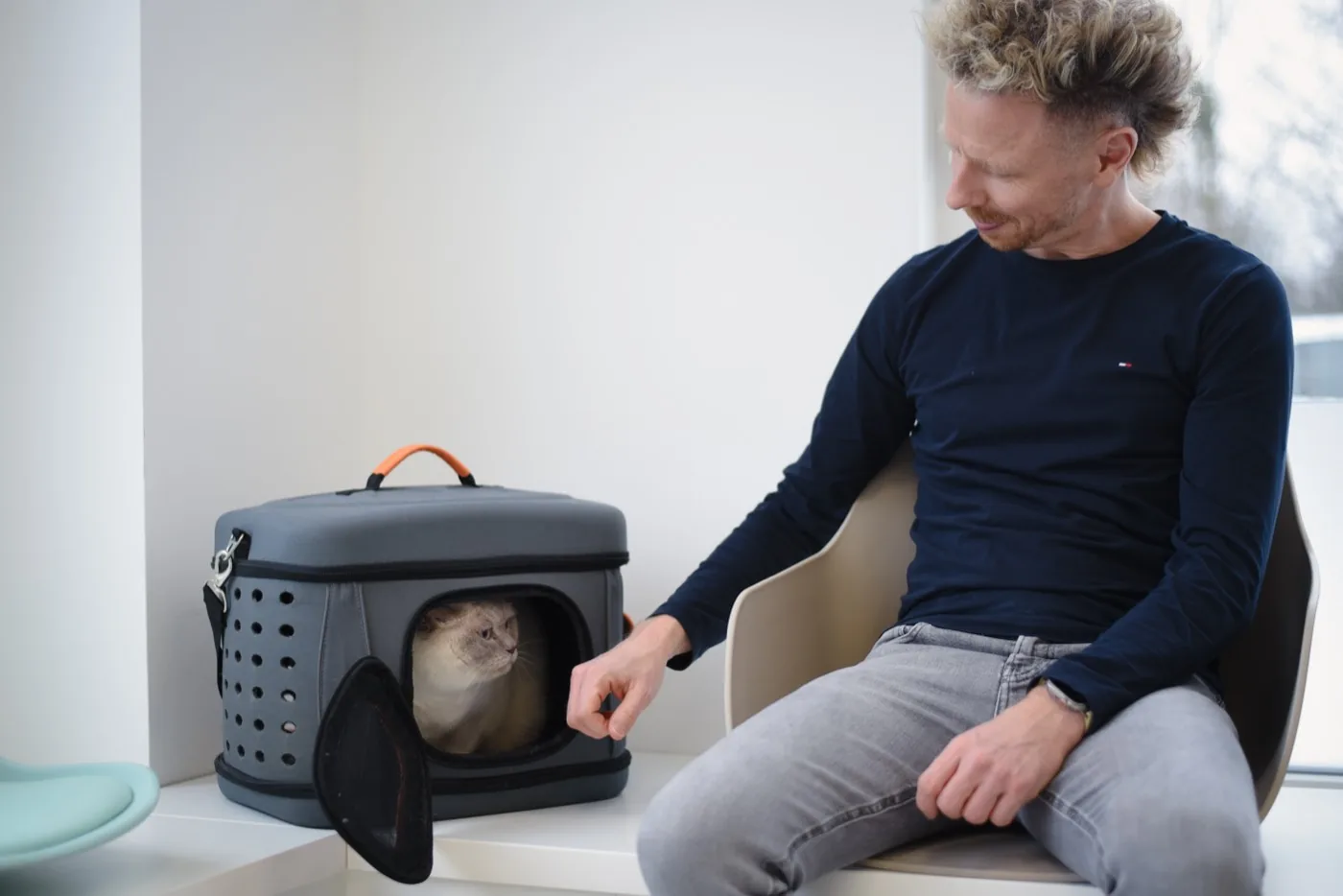
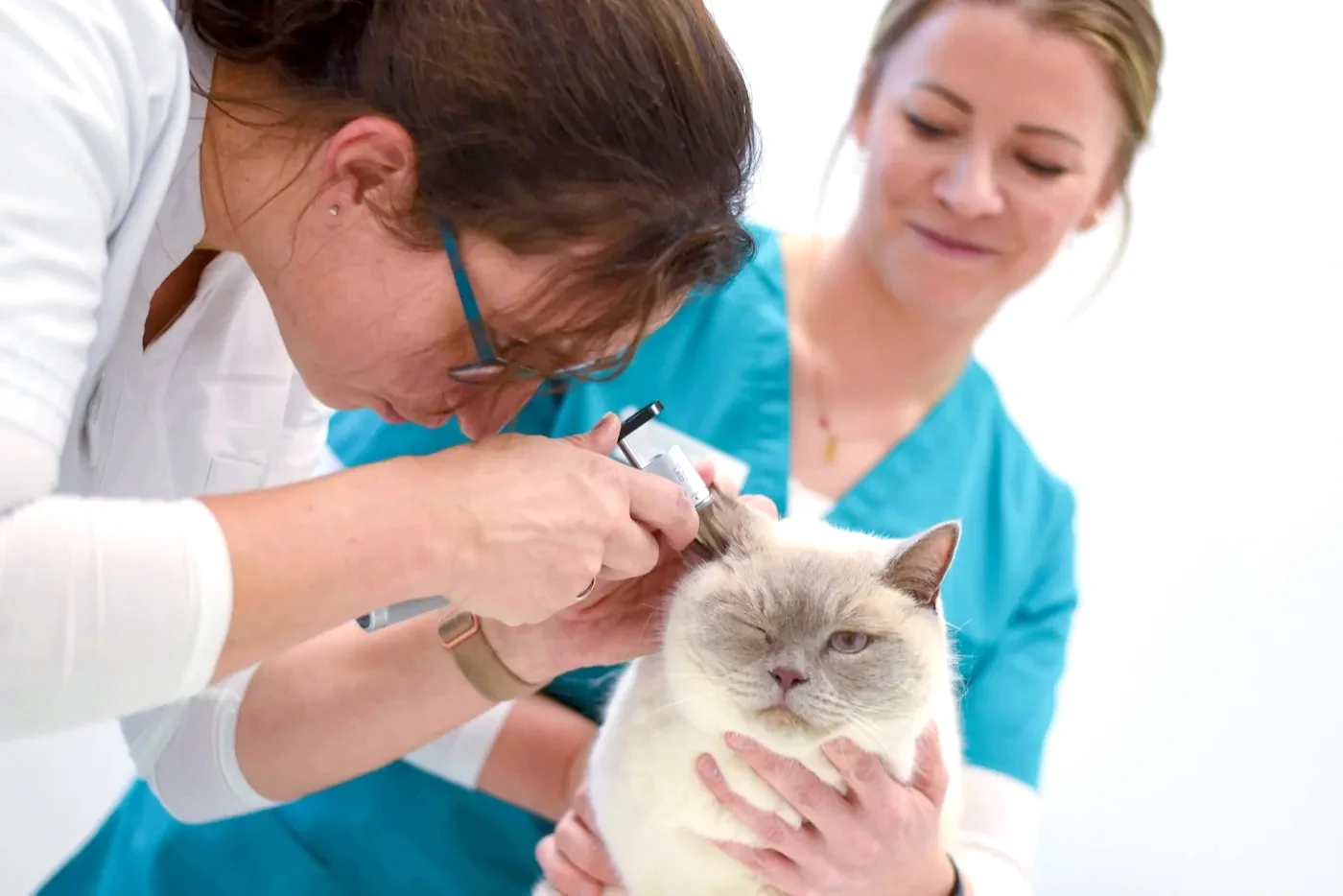
- A gentle examination: a calm voice, slow movements and, where possible, an examination in the familiar lower half of the carrier.
- Appointments at quiet times: for especially anxious cats we are happy to choose an appointment right at the start of consultation hours.
How to prepare for the visit at home
Most of the stress often arises before you even reach the practice, when catching the cat and during the journey. With a little preparation this part becomes considerably more relaxed:
- Make the carrier an everyday piece of furniture: leave the open carrier out permanently, with a blanket and treats inside. That way it becomes a place of retreat rather than a signal of fear.
- Include a familiar scent: a worn blanket or an item of your clothing is reassuring along the way.
- Transport several cats separately: each cat in its own carrier — otherwise stress is passed from animal to animal.
- Place the carrier safely and calmly: secured with a seatbelt in the car, and a cloth over it provides a sense of safety.
- Stay relaxed yourself: your cat senses your tension. A calm voice helps more than any reassuring word.
How often should my cat have a preventive check-up?
As a guide: healthy adult cats once a year, and cats from around seven years of age ideally every six months. For older animals this often also includes a blood and urine check, because it allows changes in the kidneys or thyroid to be detected early — long before your cat shows any sign.
We discuss individually which interval makes sense for your cat, depending on age, history and circumstances of life.